















Vietnam stretches more than 1,600 kilometres from north to south. So transport between cities in Vietnam is always a trade-off. You weigh speed, cost and the view from the window. The general logic is simple. Fly between distant cities. Take the train for the scenic stretches. Ride a sleeper bus when money is tight. And hail a car through an app for city trips and short hops. Here is how each option works in practice. We also cover the cost and how to match it to your route.
In short: what to pick
If you need speed, fly. The Hanoi–Ho Chi Minh City flight takes about 2 hours. By train the same trip takes 30+ hours. If you want the scenery, take the coastal train. On a tight budget, take an overnight sleeper bus. And for getting around a city, Grab or Xanh SM is the easy choice. The same goes for hops under 100–150 km. Let us look at each option in turn.
Flying: the backbone for long routes

Domestic flights are the foundation of how transport between cities works over long distances. The country has a dense network of airports: Hanoi, Da Nang, Ho Chi Minh City, Nha Trang (Cam Ranh), Phu Quoc, Da Lat and a dozen more. End to end, the flight takes about 2 hours. So most travellers fly rather than ride.
There are three main carriers. Vietnam Airlines is full service. The base fare already includes 23 kg of baggage, a meal and seat selection. In the first quarter of 2026 it posted the best punctuality, around 86%. Vietjet is the low-cost option. It flies the most routes at the cheapest fares. However, almost everything is charged separately, even printing a boarding pass at the desk. Bamboo Airways sits in the middle. After restructuring it cut its fleet sharply, so it now runs fewer flights.
One thing to note for 2026. A spring fuel crisis pushed carriers to trim flights and raise fares. Secondary routes were hit hardest. So book popular routes ahead of time, such as Hanoi–Da Nang or Ho Chi Minh City–Phu Quoc. Fares are usually cheapest 4–8 weeks before departure.
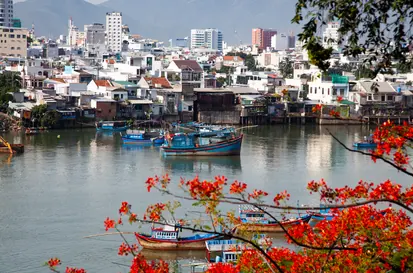
A tip on airports. Domestic and international terminals often stand side by side, but they are separate buildings. Leave time to walk across. Flying to Nha Trang? Cam Ranh airport is 35 km from town. We covered the transfer in detail in our Cam Ranh airport guide.
The train: the Reunification Express the length of the country

Caption: Vietnam’s main railway runs along the coast from Hanoi to Ho Chi Minh City. The most scenic stretch is between Hue and Da Nang via Hai Van Pass. For overnight legs, book a soft sleeper.
Vietnam’s main railway is the «Thong Nhat» line — the Reunification Express — linking Hanoi and Ho Chi Minh City. It hugs the coast and ranks among the most scenic rides in Asia. The stretch between Hue and Da Nang over the Hai Van Pass is especially beautiful.
The full route takes 30–36 hours. Trains SE1 through SE12 run daily, several pairs a day. The fastest are SE3 and SE4, finishing in about 30 hours. Carriages offer 4-berth soft sleepers, 6-berth hard sleepers and air-conditioned soft seats. For an overnight leg, take a soft sleeper — it is comfortable and secure.
A seat on the full route costs roughly 1.03 million VND. Sleeper berths run 1.8–2 million VND, about USD 40–80. Most travellers, however, do not ride the whole line. Short scenic legs are far more popular. Think Hue–Da Nang (about 2.5 hours) or the overnight Nha Trang–Ho Chi Minh City run. Buy tickets in advance on the official Vietnam Railways site, especially in high season.
The train loses to the plane on speed but wins on experience. Besides, an overnight train saves a hotel night. For example, leave Nha Trang in the evening and you reach Ho Chi Minh City rested by morning.
Buses and sleeper buses: the budget option

If you are counting every dong, the bus is your pick. The route network reaches everywhere, including places with no airport or railway: Da Lat, Mui Ne, Hoi An, Sapa. Futa (Phuong Trang) is the largest operator: a modern fleet, fixed prices and its own ticket offices nationwide.
Vietnam’s signature is the sleeper bus — an overnight coach with beds instead of seats. The berths fold almost flat and come with air conditioning, Wi-Fi, USB sockets and sometimes a personal screen. A premium option is the limousine van or cabin bus with private pods. Intercity fares run from about 200,000 to 900,000 VND depending on route and class.
Booking is easy online through aggregators (Vexere, 12Go, Baolau), which pull together schedules from thousands of operators. Popular sleeper routes include Ho Chi Minh City–Da Lat, Ho Chi Minh City–Nha Trang and Ho Chi Minh City–Mui Ne. There are downsides too. The ride is long and drivers can be aggressive. Overnight coaches also get cold from the air conditioning. So bring a warm layer and keep your bag off the aisle.
Taxis, Grab and Xanh SM: cities and short hops
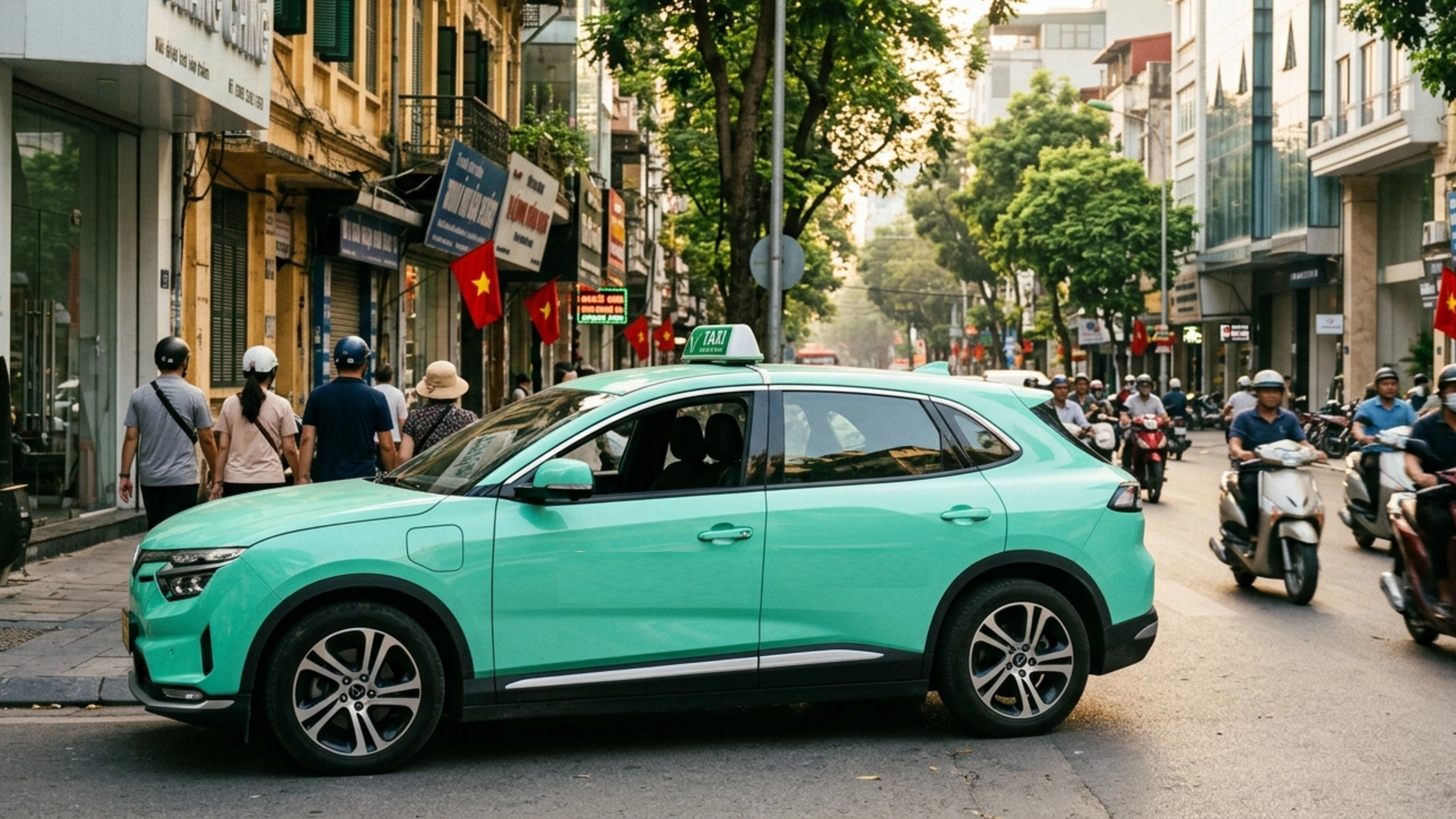
Within cities and on short hops, transport in Vietnam runs on ride-hailing apps. There are three: Grab, Xanh SM and Be. The principle is the same. You see the fare upfront. So there is no haggling and no watching the meter.
Xanh SM is an all-electric fleet of VinFast cars and bikes. It launched in 2023 and by 2026 had overtaken Grab by number of rides. The cars are new, clean and quiet. Grab remains strong and often offers motorbike taxis (GrabBike) — cheap and quick in traffic. All three apps work confidently in Hanoi, Ho Chi Minh City and Da Nang. In smaller towns, however, coverage is thinner, so a regular taxi is sometimes simpler there.
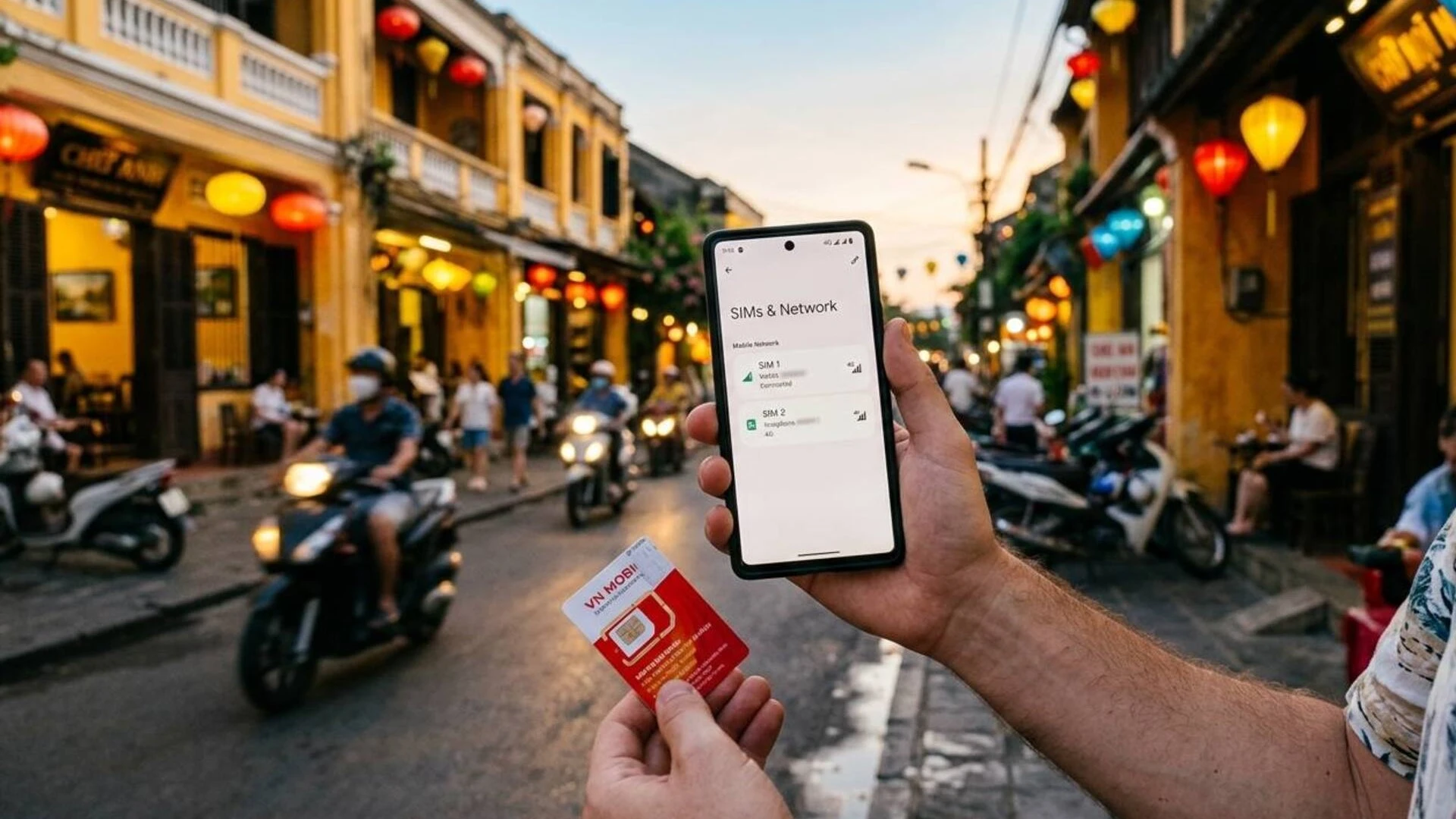
To pay, link a card or keep cash on hand. Hailing a car needs internet, which means a local SIM or eSIM. We covered how to choose one in our Vietnam SIM card guide.
Two megacities now have a metro: Line 1 is open in Ho Chi Minh City, and Lines 2A and 3 run in Hanoi. It is handy for crossing the centre at rush hour. The networks are still small, though, so the metro has not replaced taxis.
Renting a bike or car: only with care
The scooter is a symbol of Vietnam, but for intercity travel it is a poor idea. Traffic is chaotic, distances are long and accident rates are high. To rent a scooter over 50cc you technically need an international A1 licence. Without it, the rental is illegal and insurance will not pay out after a crash. So keep the bike for short trips around a resort, not the highway.
Hiring a car with a driver is a different matter. It suits a family or a group with several stops in a day. A loop around a region is a good example. We do not advise tourists to drive themselves. The rules and driving style differ sharply from what you are used to.
Which transport between cities for which route
To make it concrete, here are the typical pairings. Hanoi–Ho Chi Minh City: fly only, or lose a full day. Da Nang–Hoi An (30 km): a taxi or Grab, about 40 minutes. Hue–Da Nang: the train over the Hai Van Pass for the views. Ho Chi Minh City–Da Lat or Mui Ne: an overnight sleeper bus. Nha Trang–Ho Chi Minh City: an overnight train or bus. Inside any city: Grab or Xanh SM.
Excursions are a separate story. Say you are at a resort and want to see the surroundings without the logistics. An organised tour is simpler. The hotel transfer is already included, so transport is not your problem. For example, a day trip to Da Lat with its glass bridge, Da Nang and Hoi An with basket boats and lanterns or a Saigon city tour with the Cu Chi tunnels — with pickup straight from your hotel.




The high-speed line: what comes next
The big story for travellers is the future high-speed railway between Hanoi and Ho Chi Minh City. This 1,541 km line is built for speeds up to 350 km/h. Once finished, it will cut the cross-country trip from a day and a half to a few hours. For now, though, it is still a plan. Construction starts in late 2026, with a full launch expected closer to 2035. So the picture stays the same for the next few years. Fly the long routes, and take the conventional train for the scenic ones.
FAQ: common questions about transport in Vietnam
What is the fastest way from Hanoi to Ho Chi Minh City?
By plane. A direct flight takes about 2 hours and costs from USD 25–40 if booked early. The train on the same route takes 30–36 hours. So flying wins on time by a wide margin.
How much is a train ticket across Vietnam?
A seat on the full Hanoi–Ho Chi Minh City route costs about 1.03 million VND. Sleeper berths run 1.8–2 million VND, roughly USD 40–80. The dong rate moves, however, so check the price before you book.
What is a sleeper bus in Vietnam?
An overnight coach with reclining beds instead of seats. The berths fold almost flat and come with air conditioning, Wi-Fi and USB sockets. Sleeper buses are the cheapest way to cover medium and long distances.
Which taxi app works in Vietnam?
Grab, Xanh SM and Be. Xanh SM is an all-electric fleet of VinFast cars and, in 2026, overtook Grab by number of rides. Both apps show the fare upfront, so there is no need to haggle.
Does Vietnam have high-speed trains?
Not yet. Construction of the first line between Hanoi and Ho Chi Minh City (350 km/h) starts in late 2026, with the launch expected closer to 2035. For now, all trains run at conventional speed.
Do I need a licence to rent a motorbike?
Yes. For a scooter over 50cc you need an international A1 licence. Without it the rental is illegal and insurance will not pay out after a crash. So for intercity travel a motorbike is best avoided.
Bottom line: mix transport between cities to fit your route
The main principle is simple. You do not need one form of transport between cities for the whole trip. Instead, you mix them. Fly between regions. Take a scenic leg by train. Ride an overnight bus to save money. And use Grab inside the city. That way you get speed, scenery and a sensible budget at once. Before you travel, check the weather along your route. In the rainy season schedules can shift, as we noted in our Nha Trang weather guide. And if you would rather skip the logistics, choose excursions with a hotel transfer.
Tisland Travel has helped travellers across Southeast Asia since 2010. Our full catalogue of excursions in Vietnam covers day trips to Da Lat and Saigon. It also includes combo tours of Da Nang, Hoi An and Ba Na Hills.