








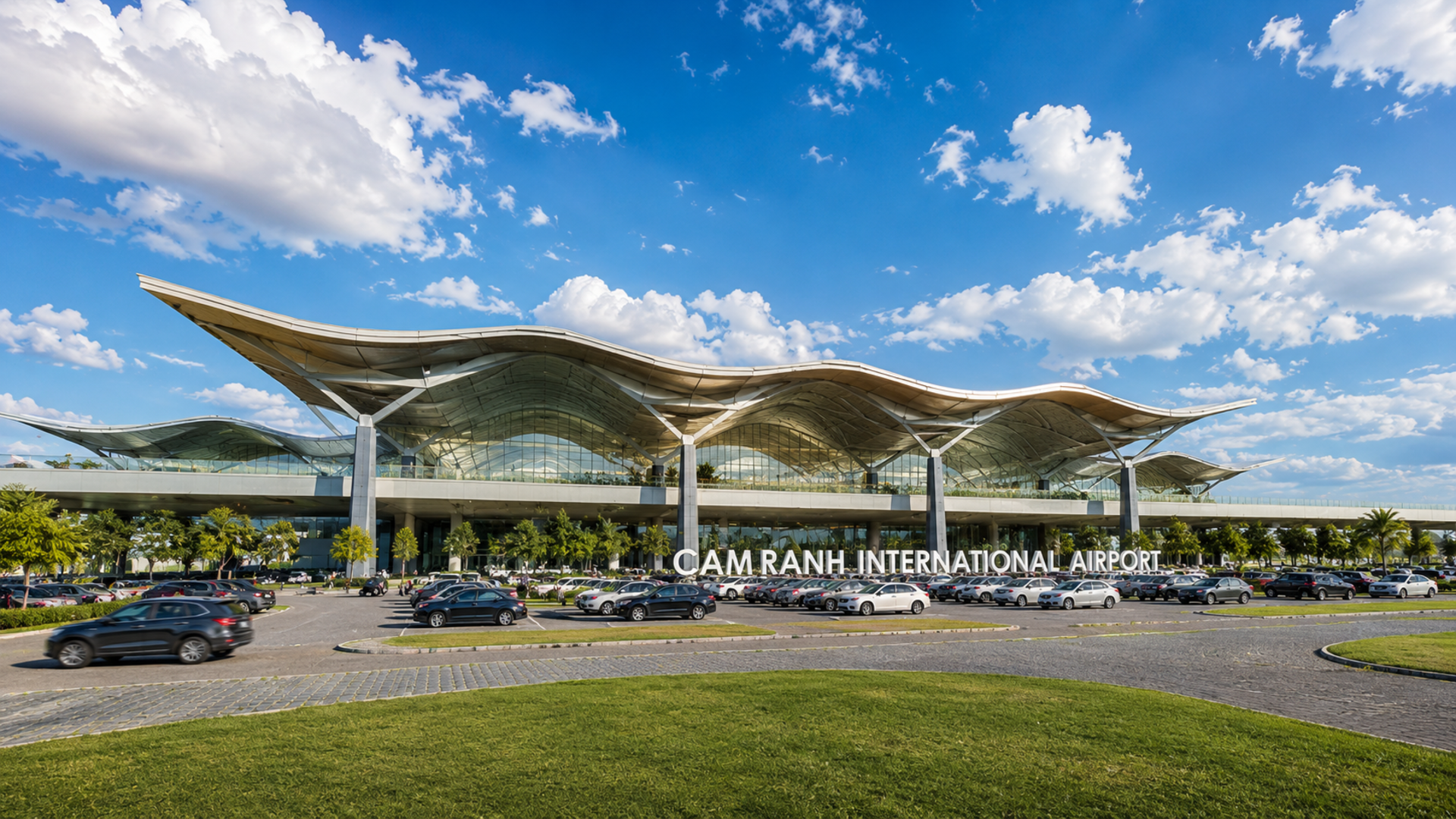
TL;DR: Cam Ranh International Airport (IATA: CXR, ICAO: VVCR) is central Vietnam’s second-busiest airport. Also, it’s the only air gateway to Nha Trang. Two terminals: T1 handles domestic flights. Meanwhile, T2 is the modern international terminal (opened 2018; 50,500 sqm, 10 gates, 4 aerobridges, 80 check-in counters). As of May 2026, about 25 airlines operate here. On the domestic side, Vietjet Air, Vietnam Airlines and Bamboo Airways dominate. Meanwhile, Korean and Russian markets lead international traffic. T2 has two lounges (Sun Coast by Sasco and Lotus Lounge by Vietnam Airlines). Additionally, you’ll find free Wi-Fi, ATMs in both terminals, currency exchange, cafes, duty-free, baby care rooms and smoking lounges.
This guide covers everything inside and around Cam Ranh. Specifically: terminal layout and on-site infrastructure, the route network, lounges and food, ATMs and currency exchange, services for families and mobility-impaired passengers, plus parking and approach roads.
Where it sits and why it matters
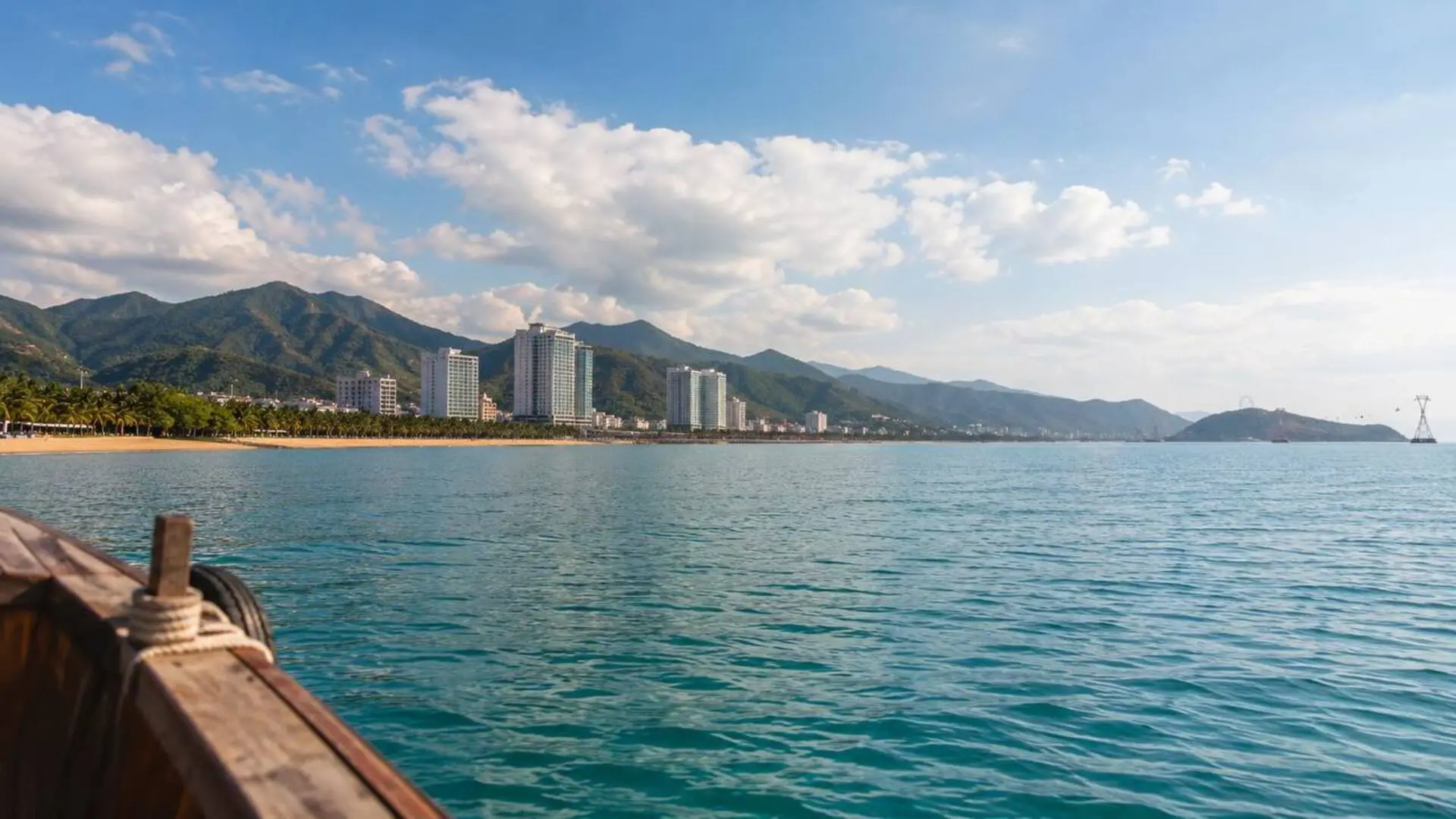
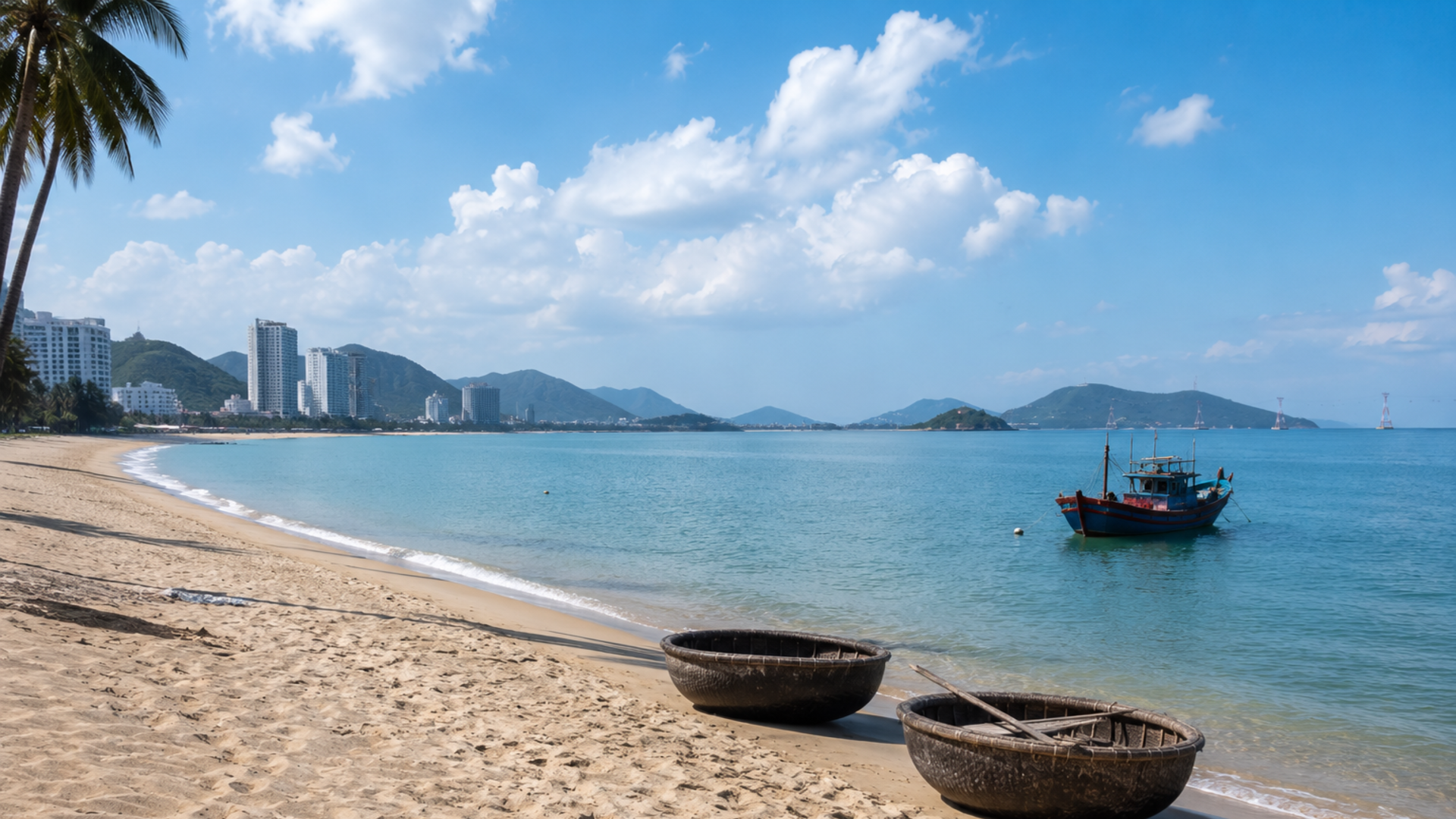
The airport occupies the Cam Ranh Peninsula in Khanh Hoa Province. Specifically, it sits 30–35 km south of central Nha Trang and 5–10 km from the southern beaches (Bai Dai, Long Beach). Originally, it was an American military airfield during the Vietnam War. Later, it was converted to civilian use, expanded, and modernized. Then in 2018, a dedicated international terminal — T2 — opened. As a result, Cam Ranh became central Vietnam’s second-busiest airport after Da Nang.
For travelers, CXR is the entry point to a wider resort cluster. This includes Nha Trang, Bai Dai, Cam Ranh City, Doc Let, and the northern bays up to Ninh Hoa. Meanwhile, the closest international airports sit over 200 km away. Specifically: Tuy Hoa (TBB) to the north and Lien Khuong (DLI) near Da Lat to the west. However, both are domestic-only.
Terminals T1 and T2: what’s where
T1 — domestic flights
The older building serves domestic routes only — Ho Chi Minh City, Hanoi, Hai Phong, Da Nang, Vinh. Overall, it’s modest in size with basic infrastructure: check-in counters, security, two boarding areas, a small cafe, and souvenir kiosks. Typically, most foreign visitors only see T1 during a connection. For example, after arriving on an international flight or before a domestic hop.
T2 — international
Opened June 30, 2018. Notably, the footprint covers 50,500 sqm across three floors. Overall, it’s designed for peak capacity of 6 million international passengers per year.
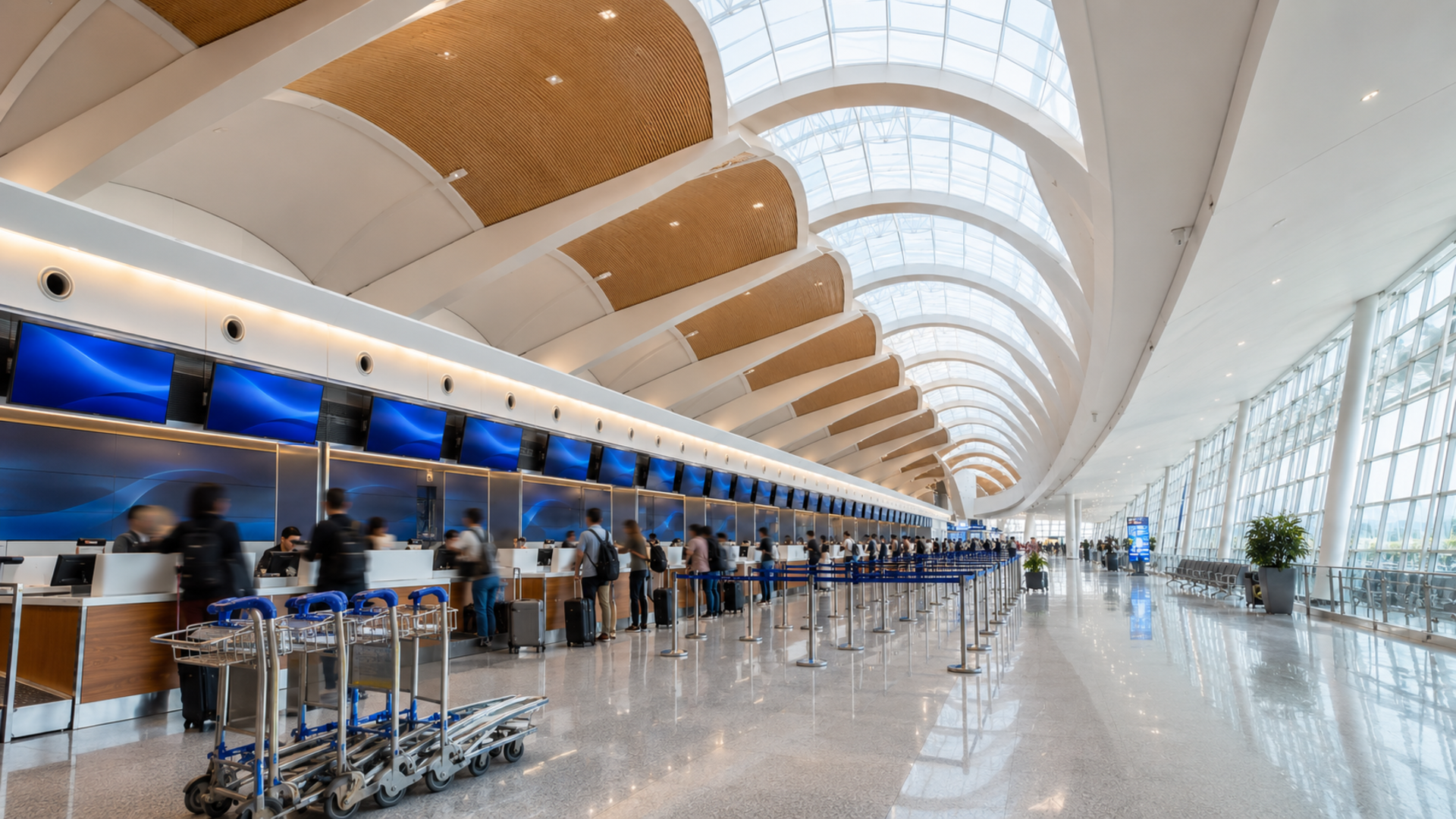
Inside T2:
- 4 aerobridges and 6 remote stands with bus connections to the terminal
- 10 boarding gates (Gates 1–10)
- 80 check-in counters arranged in four rows
- 6 baggage carousels in the arrivals hall
- 12–15 immigration counters for arrivals and the same for departures
Architecturally, the facade references a swallow’s nest (Yến Sào), a traditional product of Khanh Hoa Province. Inside, climate control runs 24/7 at 22–24 °C. That’s a welcome contrast when it’s 33 °C outside.
The two terminals share a forecourt and canopy. Walking between them takes 5–10 minutes. However, there’s no free shuttle between T1 and T2.
Airlines and route network
As of May 2026, around 25 airlines operate scheduled service from Cam Ranh. Overall, the network splits into three clusters.
Domestic routes
T1 connects to Vietnam’s main cities:
- Hanoi (HAN) — Vietnam Airlines, Vietjet Air, Bamboo Airways. Up to 15–20 daily flights in high season.
- Ho Chi Minh City (SGN) — same carriers plus Pacific Airlines and Vietravel Airlines.
- Da Nang (DAD), Hai Phong (HPH) — Vietjet Air, Vietnam Airlines.
- Seasonal: Vinh (VII), Tho Xuan (THD).
Overall, Vietjet Air is the largest carrier at Cam Ranh with around 88 weekly departures. Vietnam Airlines, in turn, ranks second.
Korea and Southeast Asia
South Korea is the dominant international market. Specifically, direct flights operate to Seoul (Incheon), Busan (PUS), Daegu and Cheongju. Carriers include Korean Air, Asiana, T’way Air, Jin Air and Jeju Air. Overall, Seoul ranks as the #1 international destination by passenger volume.
Within the wider region: Singapore (Scoot). Also, Phnom Penh — Air Cambodia launched twice-weekly service in January 2026. Additionally, seasonal routes include Kuala Lumpur and Bangkok (Thai AirAsia).
Russia, CIS, and Mongolia
Notably, direct charters from Russia (Moscow, Irkutsk, Novosibirsk, Vladivostok) drive a substantial share of CXR’s international traffic. However, carriers and schedules shift seasonally. In December 2025, Vietjet Air launched direct Ulaanbaatar–Cam Ranh service. Meanwhile, Mongolia’s Hunnu Air operates a parallel weekly charter on the same route. Additionally, Central Asian routes include Almaty, Astana and Tashkent (seasonal).
China
Several Chinese cities — Guangzhou, Chengdu, Kunming, Hainan — appear seasonally, varying with demand.
For exact schedules, check the official airport site. Alternatively, aggregators like FlightsFrom show the actual upcoming-week network.
Lounges
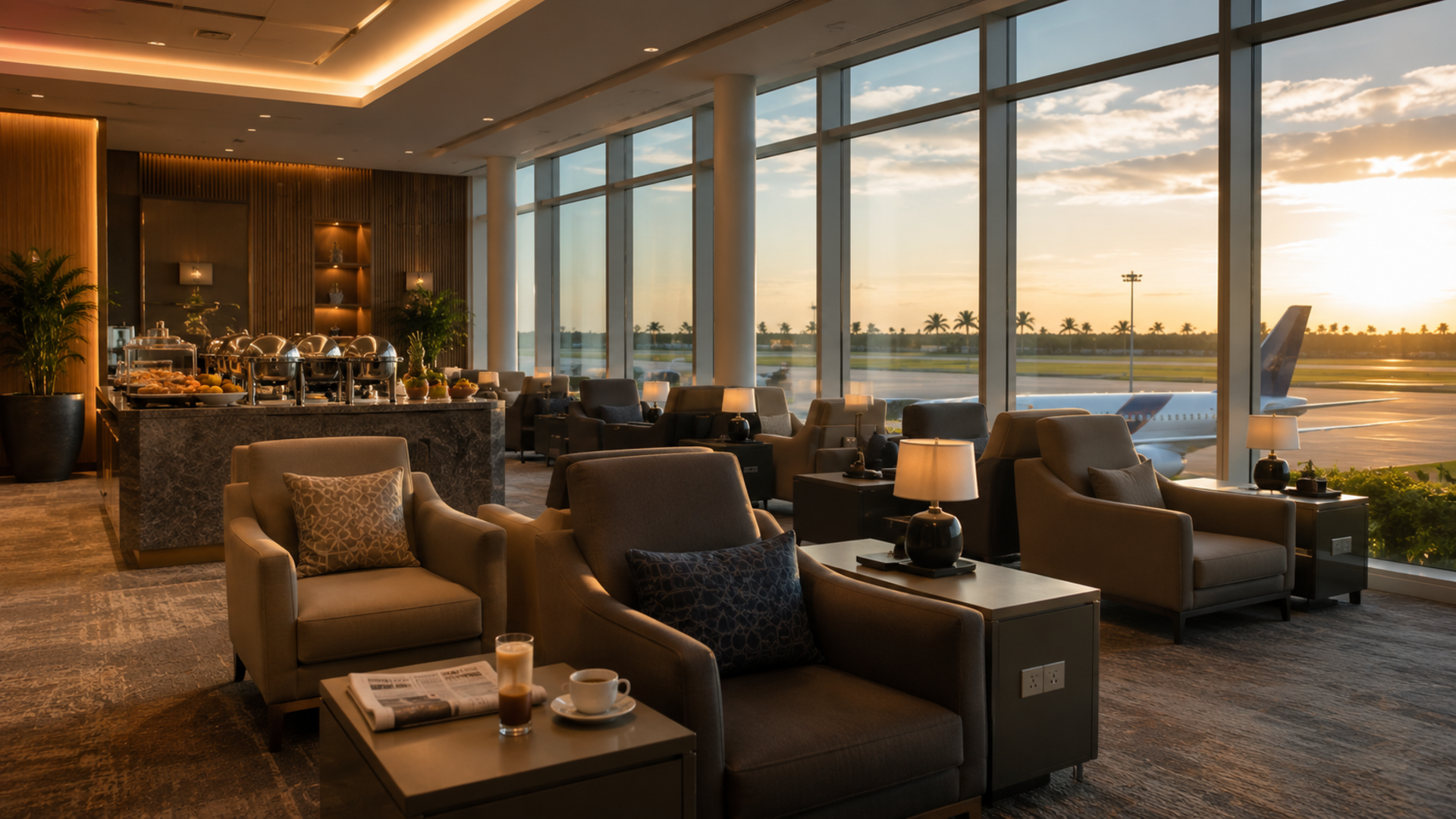
T2 has two lounges.
Sun Coast Lounge (Sasco)
This is a pay-per-use lounge operated by Sasco — Southern Airports Services Joint Stock Company. It sits airside in the departures area opposite Gates 1–3. Access options include:
- Walk-in payment at the desk (cash or card)
- Priority Pass, LoungeKey, DragonPass memberships
- Mastercard Travel Pass and similar credit-card lounge programs
Inside, you’ll find hot and cold dishes, soft drinks, coffee, beer and wine, showers, Wi-Fi, plus comfortable seating with power outlets. Overall, a solid spot to decompress after a long flight or during a layover.
Lotus Lounge (Vietnam Airlines)
Vietnam Airlines’ private lounge. Access is restricted to Business Class passengers and Lotus Miles Platinum/Gold elite members. However, Priority Pass is not accepted here.
Wi-Fi, ATMs, currency exchange
Wi-Fi. A free network called Cam_Ranh_Airport (exact name varies by terminal). Typically, sign-in requires a boarding pass number or SMS code. Speed is fine for messaging, email, and maps. However, video calls can stutter at peak hours.
ATMs. Available in arrival and departure halls of both T1 and T2. Visa and Mastercard work everywhere. Meanwhile, UnionPay is accepted at some machines. Typically, the withdrawal limit per transaction is 3–5 million VND. Additionally, expect a fee of 50,000–80,000 VND plus your issuer’s conversion charge.
Currency exchange. Counters in the international terminal handle US dollars and euros. However, rates are 3–5% worse than downtown. Therefore, exchange just enough for the first day. Then do larger amounts at banks or street exchanges along Hung Vuong in Nha Trang.
Dining and shopping
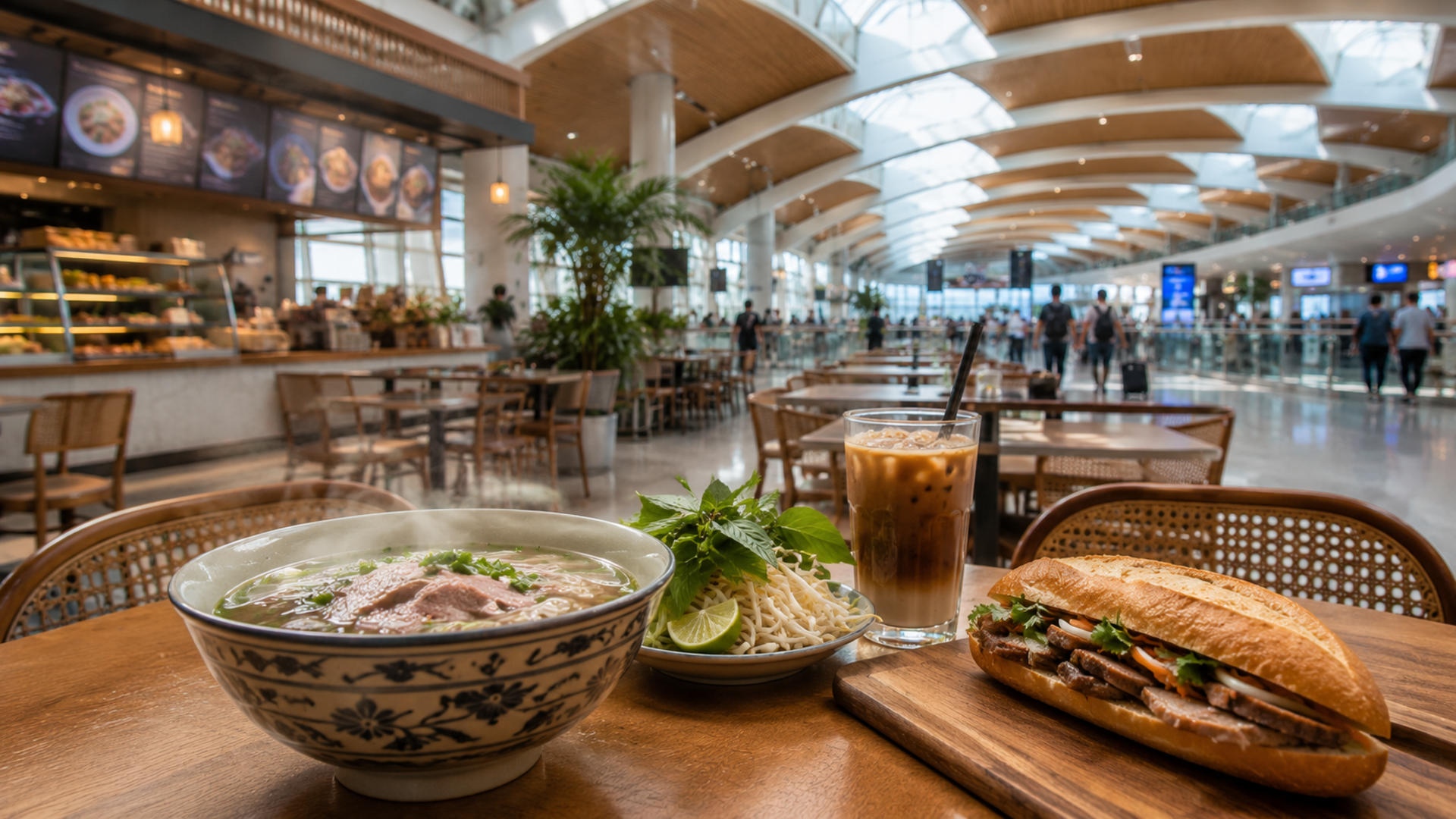
The main food court in T2 sits airside, after passport control. Options include Vietnamese and international cuisine: pho, banh mi, burgers, coffee, and fast food. Meanwhile, the landside area (before security) has a more limited selection — a couple of cafes and coffee stands.
T1 has modest food options — a small cafe plus fast-food outlets (KFC, Highlands Coffee, similar).
Duty-Free in T2 covers the standard range. Specifically: liquor, perfume, chocolate, and souvenirs (including local specialties — bird’s nest, Binh Thuan cashews, Vietnamese coffee). However, prices are comparable to in-town shops, so don’t expect serious savings. Still, before flying out, it’s worth picking up a bag of Vietnamese coffee or local rum.
Families and accessibility
Baby care rooms in T2 operate in two locations: airside (after security in departures) and in the arrivals hall. Each includes changing tables, hot water for formula, and feeding areas.
Mobility assistance. Elevators, ramps, and accessible restrooms exist in both T1 and T2. However, wheelchair assistance must be requested in advance through your airline. Then staff meet passengers at the terminal entrance or jet bridge.
Smoking rooms, medical, lost & found
Smoking. T2 has air-conditioned, ventilated smoking rooms on the second floor of the departures area and in arrivals. Additionally, open-air smoking zones are outside the terminal entrances. However, smoking in general waiting areas and near gates is prohibited and fined.
Medical. Both terminals have a medical office with a duty physician. Typically, this covers sudden health issues or blood pressure problems in elderly passengers. Meanwhile, serious cases get a city ambulance from Cam Ranh hospital.
Lost & Found. The baggage office sits next to the arrivals carousel area in T2. However, for personal items lost elsewhere in the terminal, any information desk will route the inquiry.
Parking and approach roads
Paid parking serves both terminals. Short stays (under 30 minutes) are token-priced. Therefore, this is useful for picking up arrivals. Beyond that, rates step up hourly. Meanwhile, full-day parking runs around 100,000–150,000 VND.
Highway QL1A approaches the airport with a direct exit to the parking area. Also, signage is in English and Vietnamese. If you’re coming from the north (Nha Trang side), the landmark is the bridge over Binh Ba Bay. Then it’s another 10–15 km past the bridge to the terminals.
Arrival and transfer at a glance
After landing at Cam Ranh, six steps stand between you and the exit. Specifically: disembark → apron bus → immigration (1–2 hours at peak times on Russian charters) → baggage claim → customs → terminal exit. Overall, wheels-down-to-curb time runs 60–150 minutes. On peak flights, Fast Track shortens the wait. Specifically, a representative meets you with a name board and walks you through a dedicated immigration lane.
From the terminal, Nha Trang sits 30–35 km north along Highway QL1A — a 40–60 minute drive. Overall, three realistic options exist. First, the shuttle bus (50,000–65,000 VND per person, every 30 minutes to Nha Trang railway station). Second, a metered Mai Linh or Vinasun taxi (450,000–600,000 VND to the city center). Third, Tisland Travel’s private transfer with meet-and-greet in the arrivals hall and a flat per-vehicle rate. The last option especially suits families with kids, late-night arrivals, and destinations beyond central Nha Trang — Bai Dai, Dam Bai, Ninh Van Bay.
FAQ
Terminals, airlines, lounges
How many terminals does Cam Ranh Airport have?
Two. Specifically, T1 for domestic flights (the older building) and T2 for international flights (opened June 30, 2018; 50,500 sqm across three levels). The terminals sit side by side, with a 5–10 minute walk between them.
Which airlines fly to Cam Ranh?
As of May 2026, about 25 airlines operate at CXR. Vietnamese carriers include Vietnam Airlines, Vietjet Air, Bamboo Airways, Pacific Airlines and Vietravel Airlines. Meanwhile, international carriers include Korean Air, Asiana, T’way Air, Jin Air, Thai AirAsia, Scoot, AirAsia, China Southern, Air Cambodia (from January 2026) and Hunnu Air (Mongolia).
Are there lounges at Cam Ranh Airport?
Yes — two in T2. Sun Coast Lounge (Sasco) is pay-per-use and accepts Priority Pass, LoungeKey, and DragonPass. Meanwhile, Lotus Lounge belongs to Vietnam Airlines and serves Business Class passengers and Lotus Miles elite members only.
Money, parking, daily essentials
Is Wi-Fi free at Cam Ranh Airport?
Yes. The network is called Cam_Ranh_Airport. Typically, sign-in is via boarding pass number or SMS. Speed is stable for messaging and email. However, video calls may stutter at peak hours.
Where can I withdraw cash or exchange currency at CXR?
ATMs sit in arrival and departure halls of both terminals. Currency exchange in the international terminal accepts USD and EUR. However, rates are 3–5% worse than in town.
Is there parking at Cam Ranh Airport?
Yes. Short stays under 30 minutes are nearly free. Meanwhile, daily parking runs around 100,000–150,000 VND. Overall, the short-term lot outside T2 is the easiest pick-up spot.
Are there baby care facilities at Cam Ranh Airport?
Yes — in T2’s airside departures area and the arrivals hall. Specifically: changing tables, hot water for formula, and feeding areas.
Where can I smoke at Cam Ranh Airport?
Designated smoking rooms exist in T2 (ventilated, air-conditioned). Additionally, open-air zones sit outside the terminal entrances.
Further reading
- Our full Vietnam tour catalog — diving at Hon Mun, Kong Forest zipline, Viet Breeze sea tour, paramotor flights.
- Nha Trang beaches: how to choose — six beaches compared.
- Nha Trang weather month by month — temperatures, rainfall, seasons.
Sources
- Cam Ranh International Airport — official site
- Cam Ranh International Airport — Wikipedia
- Direct flights from Cam Ranh — FlightsFrom (current route network, retrieved 2026-05-23)
- Cam Ranh Airport ATMs & Currency Exchange — Airport Banking (retrieved 2026-05-23)