







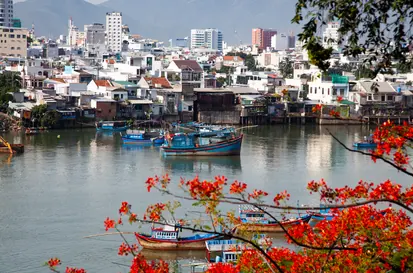



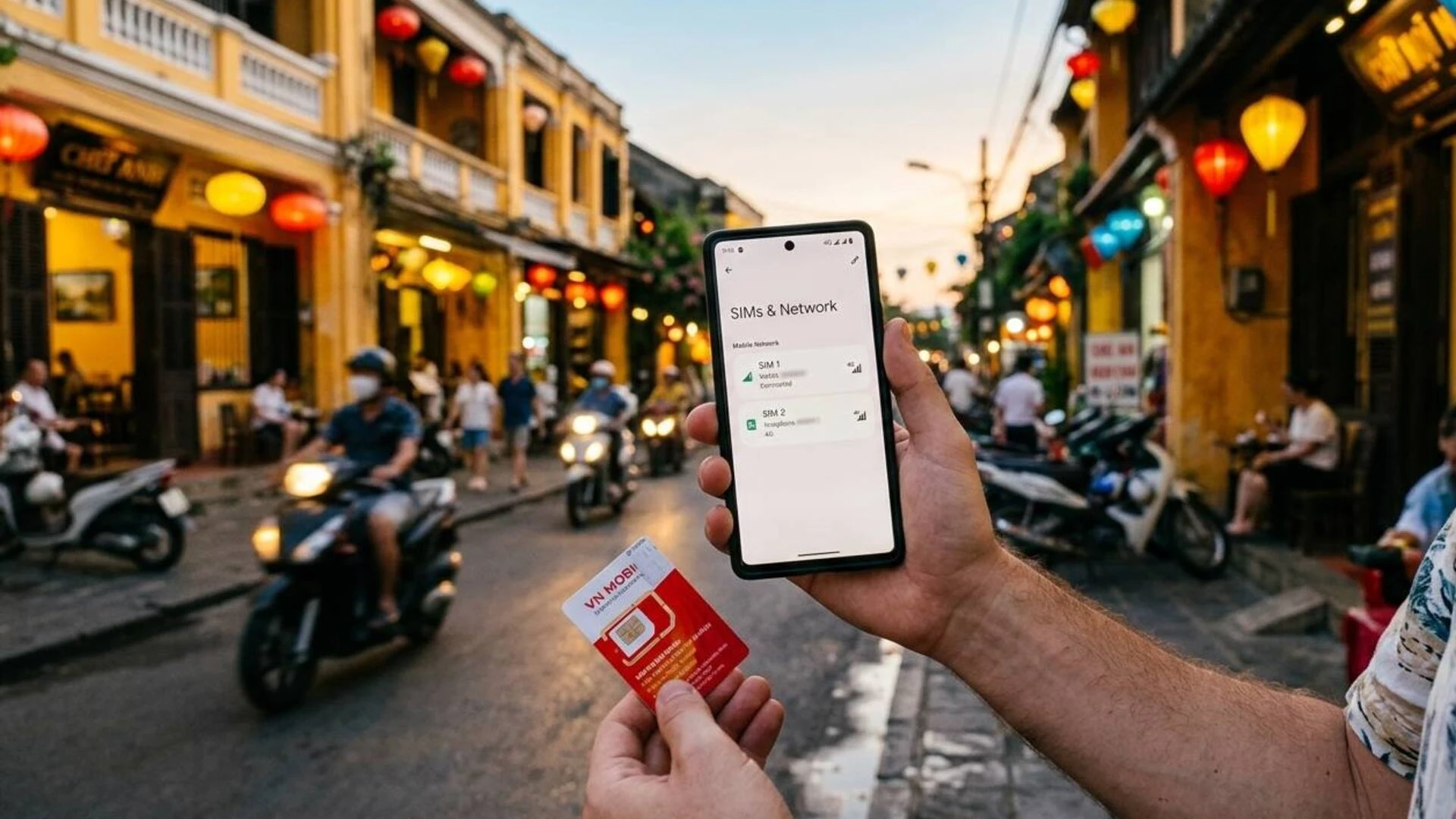
Buying a SIM in Vietnam is what three out of four tourists do within an hour of landing. Also, this is exactly when most people overpay or end up with a dead card. Since July 2024, every SIM is registered to a passport. As a result, anonymous cards are blocked automatically. Still, Vietnam has some of the cheapest mobile data in the world. Unlimited 5G for a month costs around $8, if you know where to buy it.
Short answer: in 2026, the best choice for a tourist is a Viettel SIM for 15–30 days from an official carrier kiosk. It gives you the best coverage and legal passport registration at 100,000–270,000 VND ($4–11). If your phone supports eSIM, however, Airalo or the official Viettel eSIM is even simpler. You install it before you fly, with no queue.
1. The Three Vietnamese Carriers
Vietnam’s mobile market is split between three state-owned carriers. First, all three run kiosks in international arrivals halls. Also, they all sell similar tourist plans. However, the difference is in coverage and price.
Viettel holds 54% of the market. It also leads on 5G with 91.2% population coverage. Furthermore, the average download speed reached 616.99 Mbps in January 2026. Its real advantage, however, is signal stability where rivals fall off. For example: the mountains of Sapa and Ha Giang, the Mekong Delta, the islands of Cat Ba and Con Dao, and the far beaches of Phu Quoc.
Vinaphone is the runner-up. It is owned by state-run VNPT. Similarly, coverage in major cities and popular resorts is comparable to Viettel. In remote areas, though, it weakens. Besides data, its tourist plan also bundles local-call minutes. As a result, it is handy for reaching hotels, guides or taxis.
Mobifone sits third on coverage. Still, it has a trick worth knowing: the Hi Vietnam app. After installation, the carrier gives you 8 GB of data and 10 minutes of calls free for 24 hours. In short, that is enough time to get from the airport to a downtown store and buy a proper plan at the cheaper rate.
The simple rule: for travel across the main tourist regions, Viettel is the right choice nine times out of ten. Mobifone works as a temporary fix for day one. Vinaphone, meanwhile, suits anyone who wants minutes bundled in.
2. Where to Buy Without Overpaying
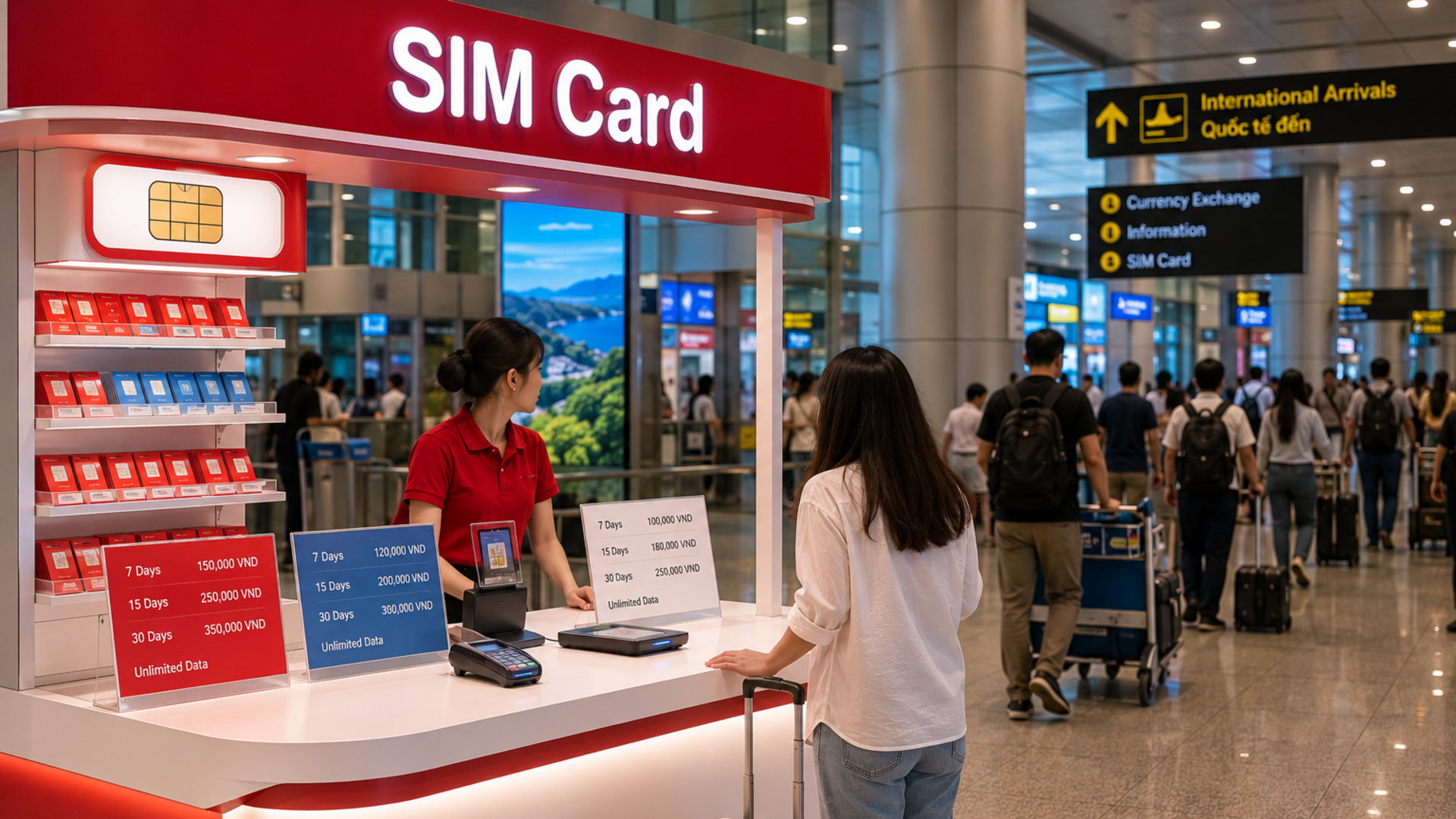
There are four places to get a SIM. Prices, however, differ by a factor of two.
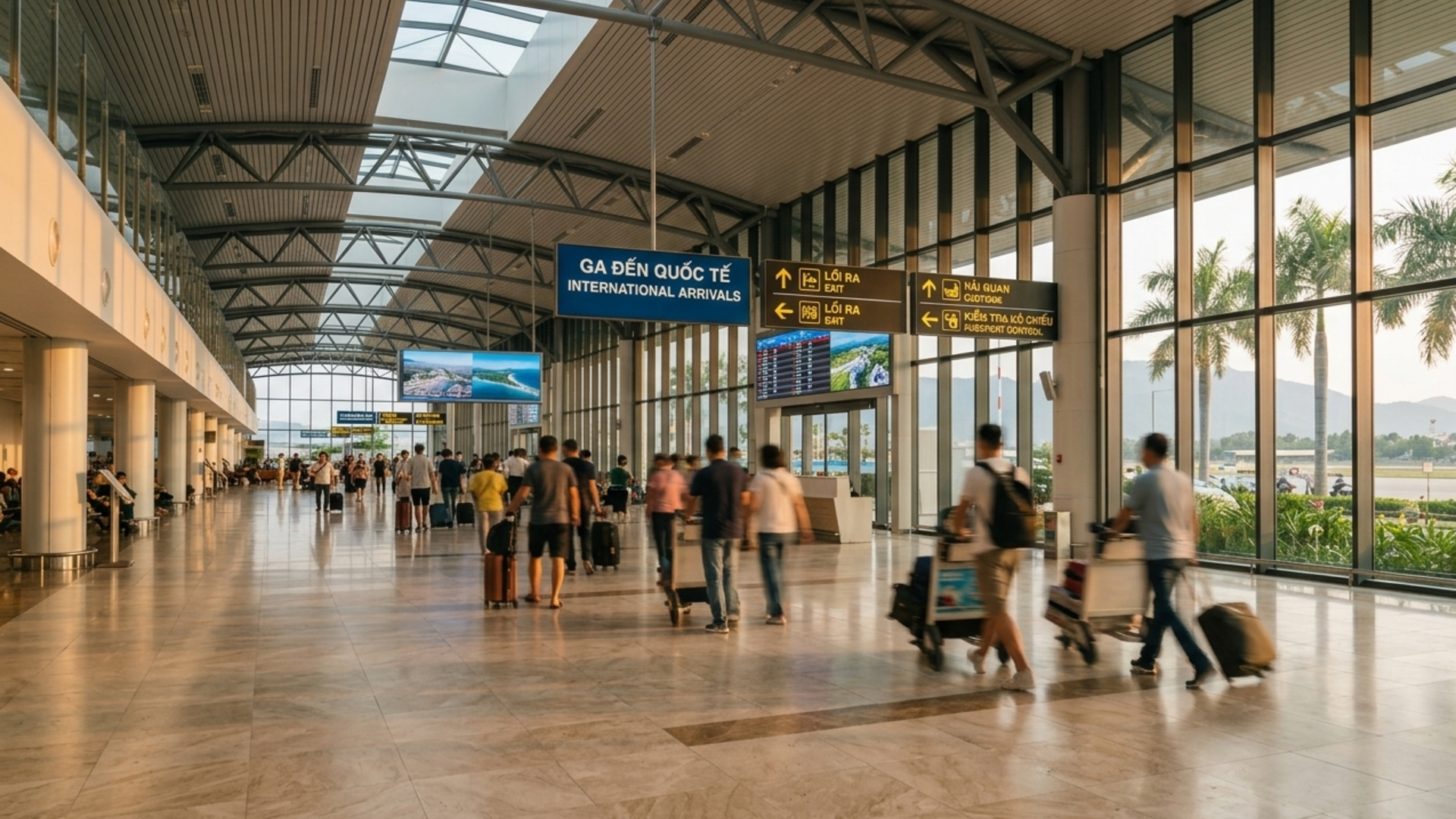
First — the airport, official carrier kiosk. This is the most convenient option. Viettel, Vinaphone and Mobifone booths stand side by side at arrivals. Staff speak English. Your passport is scanned on the spot. Internet works in 2–3 minutes. Prices, though, run 30–50% above downtown. For example, Viettel 30 days / 6 GB per day costs 270,000 VND at Tan Son Nhat. The same card is 180,000 VND in central Ho Chi Minh City.
Second — the airport, private booths. The same halls host smaller non-carrier stalls. Their banners say things like «Best Vietnam SIM» or «All Operators 4G». Some sell pre-activated cards registered to someone else. These SIMs may work for 3–7 days. Then they cut off without warning. The simple rule: if the seller doesn’t ask for your passport, it’s a ghost SIM. Walk away.
Third — an official store in the city. This is the cheapest legal option. Google Maps lists branded outlets in Hanoi, Ho Chi Minh City, Da Nang, Nha Trang, Hue, Hoi An and Phu Quoc. Prices have no airport markup. Registration takes 10–15 minutes. You walk out with a receipt and the carrier’s support contact.
Fourth — online, before you fly. eSIM is the fastest route. You buy on Airalo, Holafly or the Viettel eSIM Store. Then you scan the QR code in your phone’s settings. The alternative is a physical SIM delivered to your hotel via Klook or GetYourGuide. A courier brings the card to reception on your arrival day. You show your passport to the courier.
3. Plans and Prices
Exchange rate for reference: 1 USD ≈ 25,500 VND.
Viettel — coverage leader:
- 5 GB / 7 days — 60,000 VND ($2.40).
- 6 GB per day / 30 days + 100 minutes — 100,000 VND ($4).
- Unlimited 5G / 30 days + local minutes — 200,000 VND ($8).
- Viettel eSIM 5 GB per day / 30 days — around $13.80.
Vinaphone — minutes included:
- 3 GB per day / 7 days — 70,000 VND ($2.80).
- 5 GB per day / 30 days + international minutes — 199,000 VND ($7.80).
Mobifone — 24 hours on the house:
- Hi Vietnam (8 GB + 10 minutes / 24 hours) — free.
- 5 GB per day / 30 days — 240,000 VND ($9.60).
eSIMs from international providers:
- Airalo — 3 GB / 30 days at $9.50, 5 GB / 30 days at $11.50, 10 GB / 30 days at $21. It runs on Viettel and Vinaphone.
- Holafly — 7 days unlimited at $29, 30 days at $74.90.
- Nomad, Saily, Yesim — middle ground at $10–25 for 5–10 GB.
In short: for trips shorter than 5 days, take an Airalo eSIM at $9.50. For 7–30 days, take Viettel from a downtown store at $4–8.
4. eSIM or Physical SIM
eSIM is no longer exotic. It is supported on iPhone XS and newer, Samsung Galaxy S20+, Pixel 3+, and most 2022+ flagships from Xiaomi, OPPO and Vivo. In fact, all US iPhones after the 14 are eSIM only.
eSIM wins in three scenarios. First, a short trip of 3–5 days. Here $9.50 is faster than hunting for a carrier office. Second, Vietnam as a stopover. You only need internet for a day. Third, a multi-country Southeast Asia trip. One Airalo Asialink or Holafly Asia profile covers 14–20 countries with automatic switching.
Physical SIM wins in two scenarios. First, longer trips where cost matters. Here it is $4 versus $11–29. Second, rural Vietnam. In Ha Giang, the Mekong Delta or on northern mountain passes, a direct Viettel connection holds a steady signal. An eSIM roaming through the same carrier, however, can stutter at tower handoffs.
If your phone has no eSIM, the choice is made for you. Then a physical SIM is your only option. Otherwise, try Airalo for the first day and Viettel for the main trip.
5. Passport Rules and Airport Scams
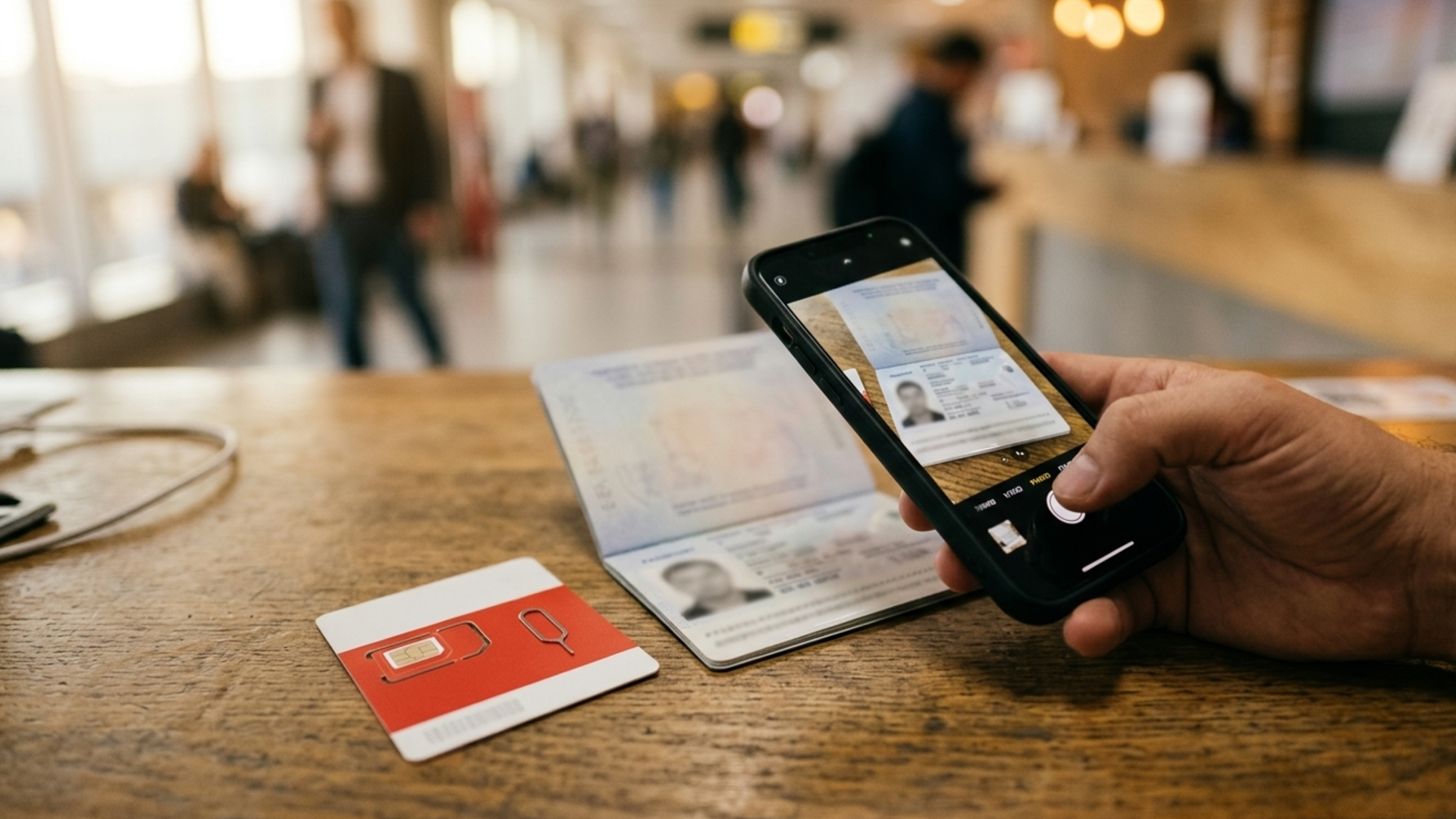
Vietnam tightened its telecom rules on 1 July 2024. Now carriers must verify documents, or the number is blocked. In practice, the procedure is simple. First, the agent scans your passport. Then they take a facial photo. Finally, they enter the data into the VNTA national subscriber database. As a result, the whole process takes 5–10 minutes at an official kiosk. Meanwhile, no other documents are accepted — not a driver’s licence, not a national ID, not a passport photo on your phone.
The good news: this rule is designed to drive ghost SIMs out of the market. Before 2023, they were sold openly on the street. Since 2024, however, such cards survive 3–7 days before auto-disconnect. In other words, a SIM offered without a passport check isn’t a shortcut. It’s a future problem.
Five mistakes tourists make again and again:
- Buying from the first booth they see. The official Viettel sign is red and white with a «V» logo. Vinaphone is blue and white. Mobifone is red with white lettering. Anything saying «All Operators Unlimited» is not a carrier.
- Accepting a SIM without showing a passport. That’s a ghost SIM. Refuse it.
- Buying «unlimited» 30 days for 50,000 VND. Real unlimited 5G never costs less than 180,000–200,000 VND. Anything cheaper means a speed cap after 1 GB per day. Or a ghost SIM.
- Not keeping the receipt. If the card fails after a week, a carrier office won’t help you without proof.
- Not checking the APN. Vinaphone and Mobifone sometimes need a manual APN setting (
m-wap,m3-world,internet).
One more essential rule: don’t let your passport leave your hands. The agent should scan it right in front of you. «Leave your passport for five minutes» is not how an official carrier works.
6. Coverage in Tourist Areas
By 2026, Viettel has finished the main phase of its 5G rollout. Specifically, the network runs in Hanoi, Ho Chi Minh City, Hai Phong, Da Nang, Nha Trang, Hue, Hoi An, Can Tho, Ha Long and Phu Quoc. In mountain regions and on remote islands, however, it falls back to 4G LTE at 30–80 Mbps.
What matters for popular itineraries:
- Hanoi, Ha Long, Ninh Binh — 5G in the cities, 4G on Ha Long Bay cruise boats. Viettel holds signal even out at sea.
- Ho Chi Minh City and the Mekong — 5G in the city, stable 4G on routes to Can Tho and Ben Tre. This includes bicycle tours along the delta tributaries.
- Da Nang — Hoi An — Hue — 5G across the whole tourist corridor. This covers the Ba Na Hills cable car and Hoi An’s Old Quarter.
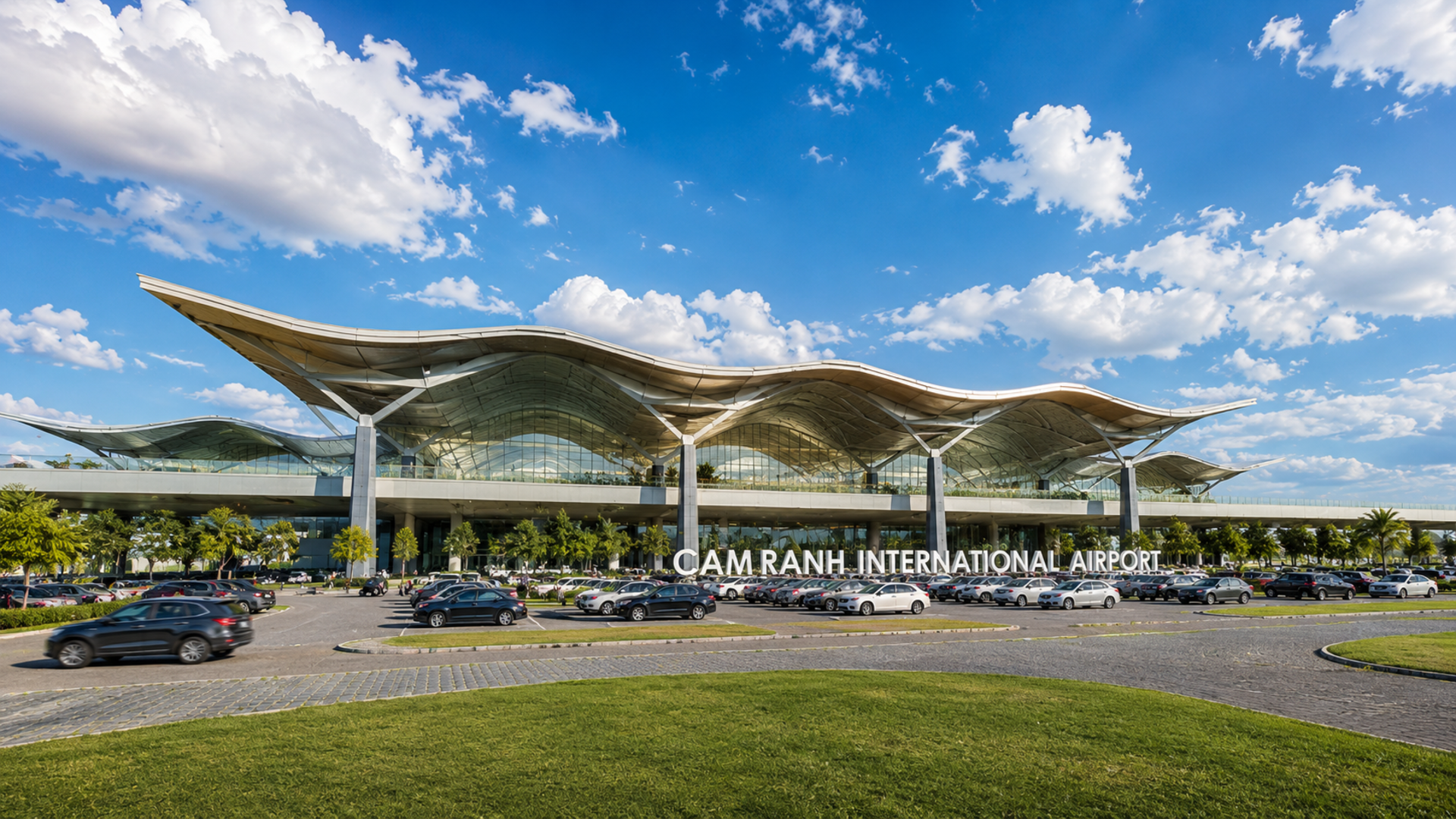
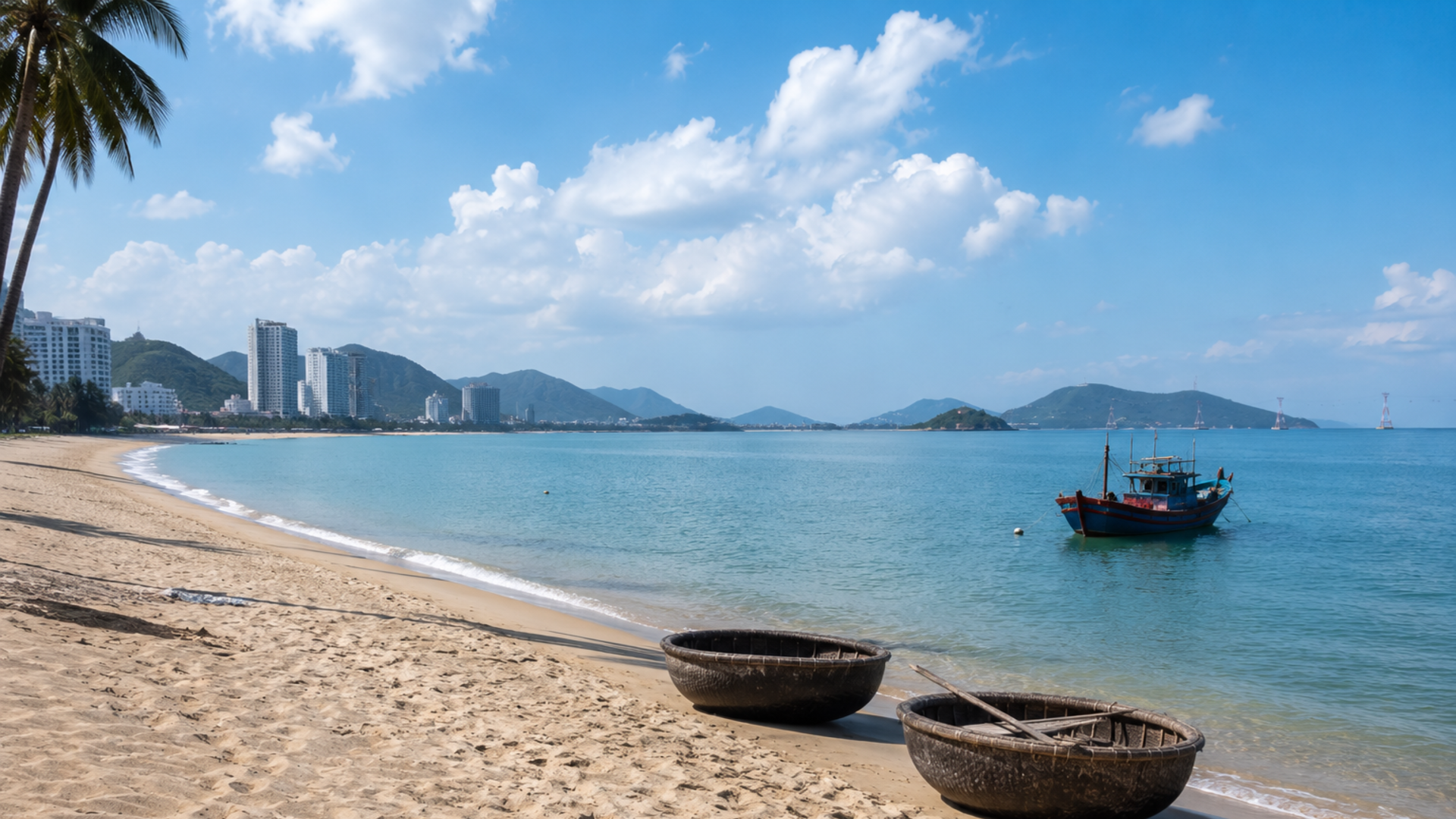
- Nha Trang and Cam Ranh — 5G in both cities, 4G on Hon Mun, Hon Tam and Hon Che islands during boat trips and snorkelling.
- Phu Quoc — 5G in Duong Dong and on the southern beaches. The northern half of the island and the national park run on 4G LTE.
- Sapa, Ha Giang, Cat Ba, Con Dao — 4G LTE, with occasional 3G dead zones in mountain pockets. Here Viettel is the only reliable choice.
For beach time in Nha Trang, Da Nang or Phu Quoc, the carriers feel similar. For cable cars, island-hopping boat trips, waterfall treks or mountain drives, however, choose Viettel only.
7. Choosing by Itinerary
3–5 days, resort only. Start with Mobifone Hi Vietnam (24 hours free). Then move to an Airalo eSIM 3 GB for $9.50. Skip the carrier offices.
7–14 days, standard sightseeing. Take Vinaphone or Viettel from a downtown store — 100,000 VND ($4).
15–30 days, multi-city trip. Take Viettel unlimited 5G — 200,000 VND ($8). This is the best value for stability.
Active programme — island-hopping, cable cars, waterfall treks, city walks in Hoi An. Take a physical Viettel SIM. In remote areas, it is the only one that holds.
No eSIM support, no time for a city store. Use the Viettel kiosk in arrivals. It is 30–50% more expensive. Still, registration is legal.
Multiple Southeast Asian countries. Use Airalo Asialink or Holafly Asia. One profile covers 14–20 countries.
Why This Matters for Travellers
Connectivity in Vietnam is cheap and fast. Quality, however, varies. The gap between the right SIM and the wrong one is real. For example, it is the difference between Google Maps loading at the top of Ba Na Hills and watching the signal bar chase a ghost while you pay roaming. In short, the right choice costs $4, not $40.
If a Vietnam trip is still in the planning stage, take a look at the Tisland Travel excursion catalogue. It gathers itineraries across different regions of the country. For example: island-hopping boat trips, cable-car rides into the mountains, walks through Hoi An’s Old Quarter, treks to waterfalls, and temple and market visits. For most of them, stable mobile data matters — offline maps, translation, photo backup, group chat.
Tisland Travel has accompanied travellers across Southeast Asia since 2010. Over 15 years — thousands of itineraries in Thailand and Vietnam.