











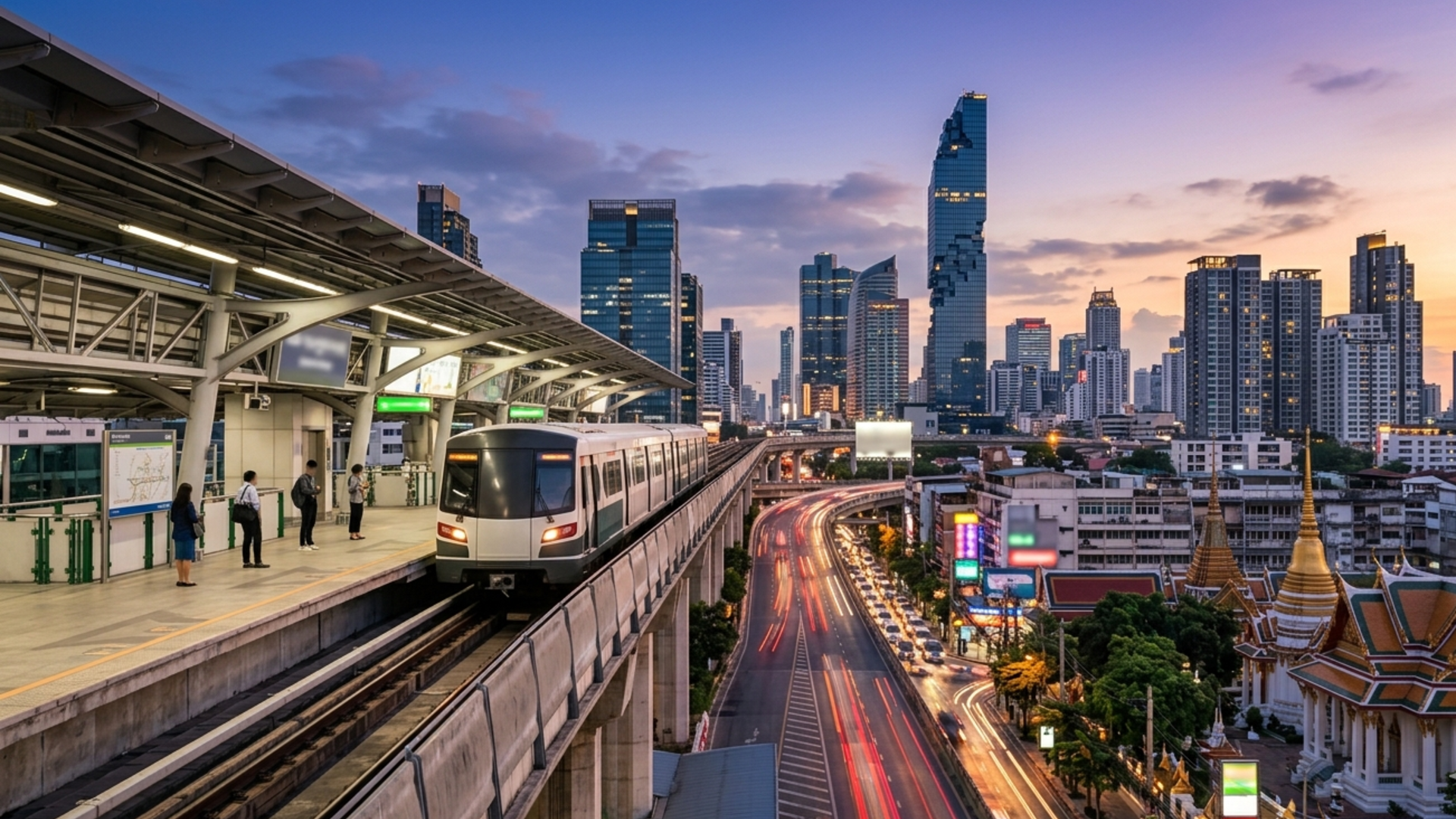
In short, two bases work best for a first visit. One is Sukhumvit, with metro, restaurants and simple logistics. The other is the Riverside along the Chao Phraya, for views and boats. For temples, head to the Old City; for street food, to Chinatown; for shopping, to Siam. The areas in Bangkok differ sharply in character. And your choice decides one thing above all. Will you spend the trip stuck in traffic, or cross the city in minutes?
The main rule is simple: stay near a BTS Skytrain or MRT subway station. Then you skip Bangkok’s famous traffic jams and reach almost anywhere without a taxi. Below we break down the key areas in Bangkok — who each one suits and what is worth seeing there.
Which area in Bangkok to choose: a quick guide
Before you book a hotel, decide on your priority. For example, a first trip with easy logistics points to Sukhumvit and the Riverside. Nightlife and dining lovers gravitate to Sukhumvit and Silom. The atmosphere of old Bangkok lives in Rattanakosin, near Khao San Road. Shoppers should pick Siam and Pratunam. And anyone after quiet streets and crowd-free cafés will like the calm Ari district.
Budget matters too. Khao San and Chinatown are the most affordable for accommodation. Sukhumvit offers a huge range at any price. The Riverside and Sathon, by contrast, are mostly pricey hotels with river views. So weigh up what counts more: price, the view from your window, or being close to the places you need.
Another practical point is how many days you have. As a rule, for two or three days it makes sense to stay in one area. Then you do not move your luggage, and that is enough time for temples, markets and a couple of malls. If you are here for a week, or combining Bangkok with the coast, you can split your stay. For instance, spend the first nights by the river for the views. Then move to Sukhumvit, closer to restaurants and the metro. That way each area in Bangkok shows its best side.
Sukhumvit: the modern centre with metro and restaurants
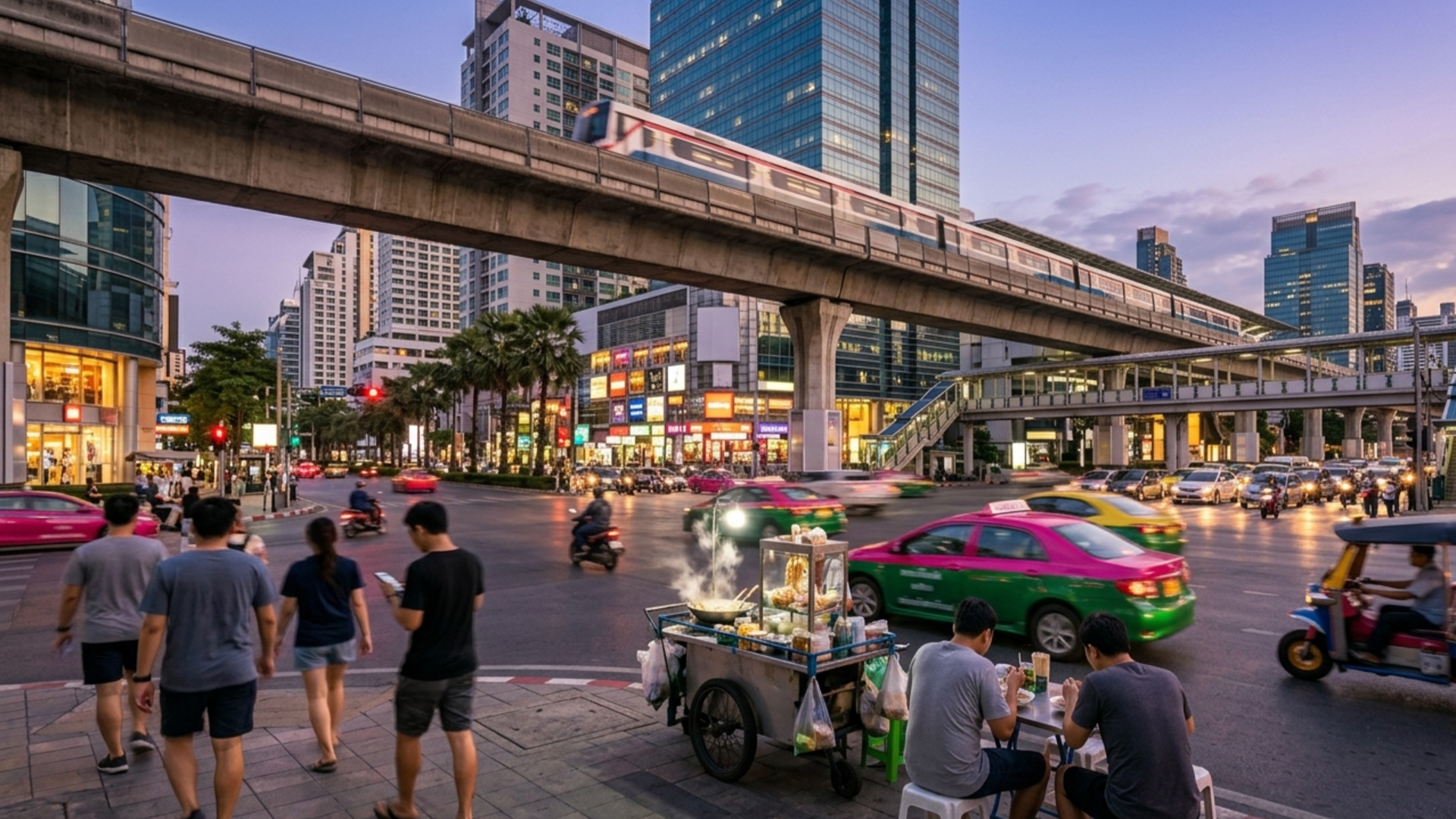
Of course, Sukhumvit is the most convenient base for a first visit. The BTS line runs along the street of the same name, and the MRT line crosses it. So it is easy to reach any part of the city from here. It is a long artery split into side streets — sois. The mood changes noticeably from soi to soi.
Lower Sukhumvit, around Nana and Asok stations, is the liveliest and most central. Here you find endless restaurants, bars and massage parlours. There is also the Terminal 21 mall and the nightlife strip of Soi 11. It is loud, but everything is a step away. Upper Sukhumvit means Thonglor and Ekkamai, stylish districts with specialty cafés, wine bars and a strong Japanese community. Many expats live here, and this is where people come for the best sushi and craft cocktails.
A word about the sois themselves. Odd and even numbers run on opposite sides of the street. Distances along a long soi can be considerable. So when booking, look beyond the area name. Check the soi number and the walking distance to a station. The low numbers (Soi 1–23) are the centre around Nana and Asok. Further on, quieter and greener blocks begin towards Thonglor.
Who it suits. Anyone who wants everything at hand and is not keen to figure out transport. Families appreciate malls with kids’ zones, and food lovers the sheer density of restaurants. If you plan to combine the capital with the sea, pick your overview tours in advance. The Thailand excursions catalogue makes it easy. Then your first day in the city is not spent searching for a programme.
Silom and Sathon: the business core and Lumpini Park
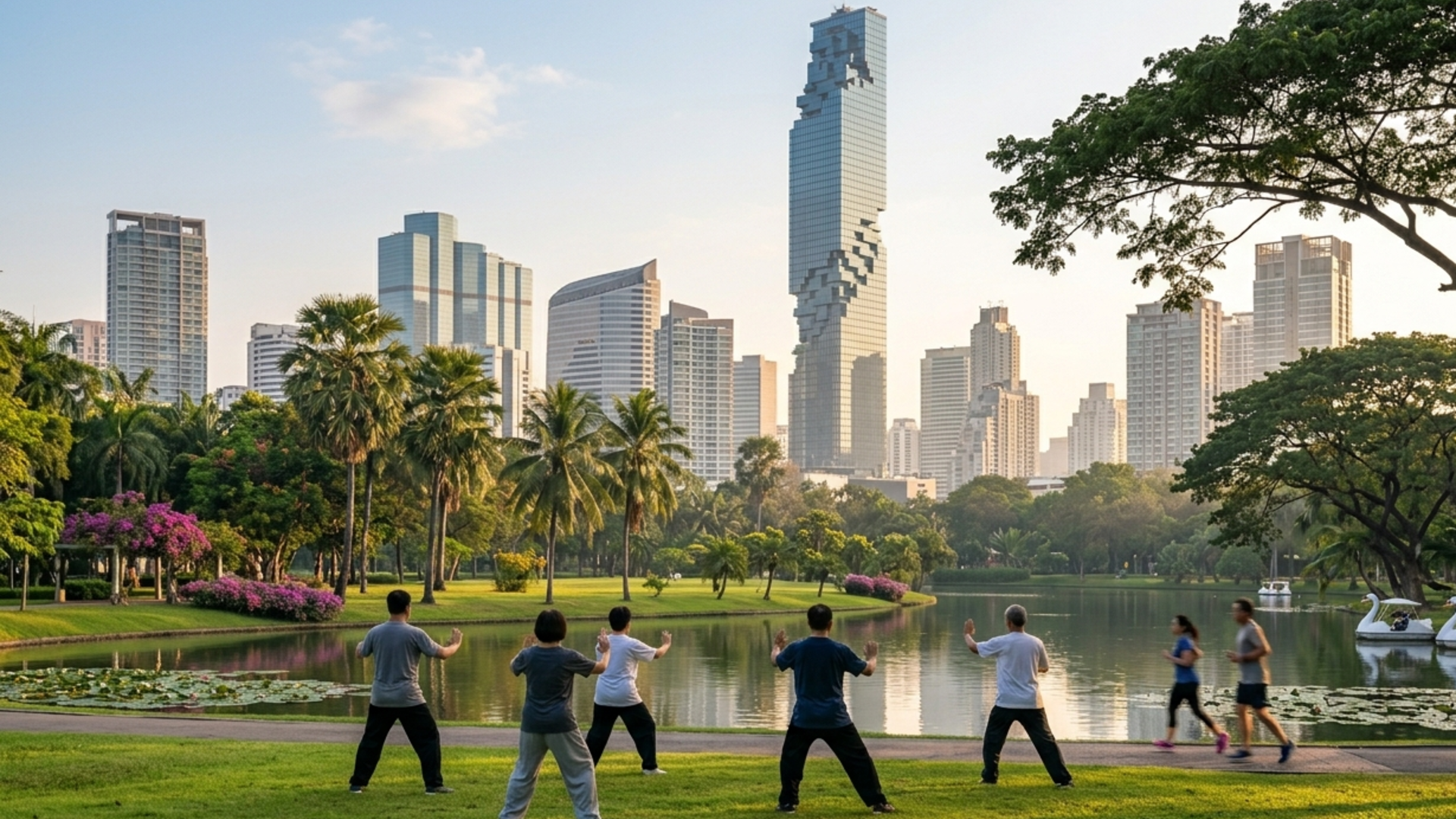
By day Silom is corporate Bangkok. However, the area comes alive in the evening. For example, here you find the busy Patpong night market. Nearby is Lumpini Park, the city’s green lungs. In the mornings people jog here, practise tai chi and row boats on the pond. Neighbouring Sathon is a quiet business zone with upscale hotels such as the Banyan Tree and SO Sofitel.
The area is well connected. Both the BTS (Sala Daeng station) and the MRT (Si Lom) run through it. The main river pier is not far either. So Silom and Sathon are a good compromise between business infrastructure, nightlife and access to the river.
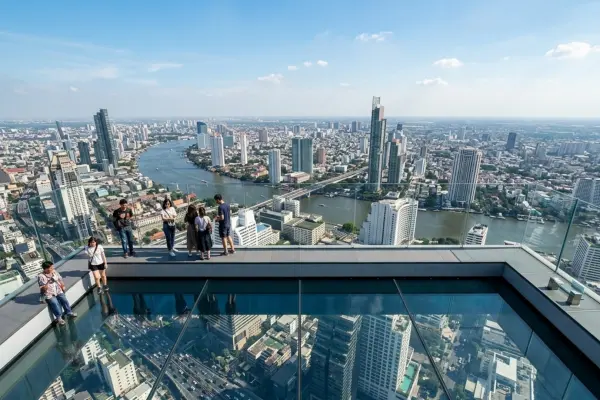
Who it suits. Travellers who value the mix of high-end restaurants, rooftop bars and quick access to the park. By the way, the rooftops of Sathon offer some of the best panoramas in Bangkok. For the highest view of all, head up the Mahanakhon observation deck. It has a glass floor at 314 metres and the Sky Verce hall of illusions.
Riverside: the Chao Phraya waterfront and the boats
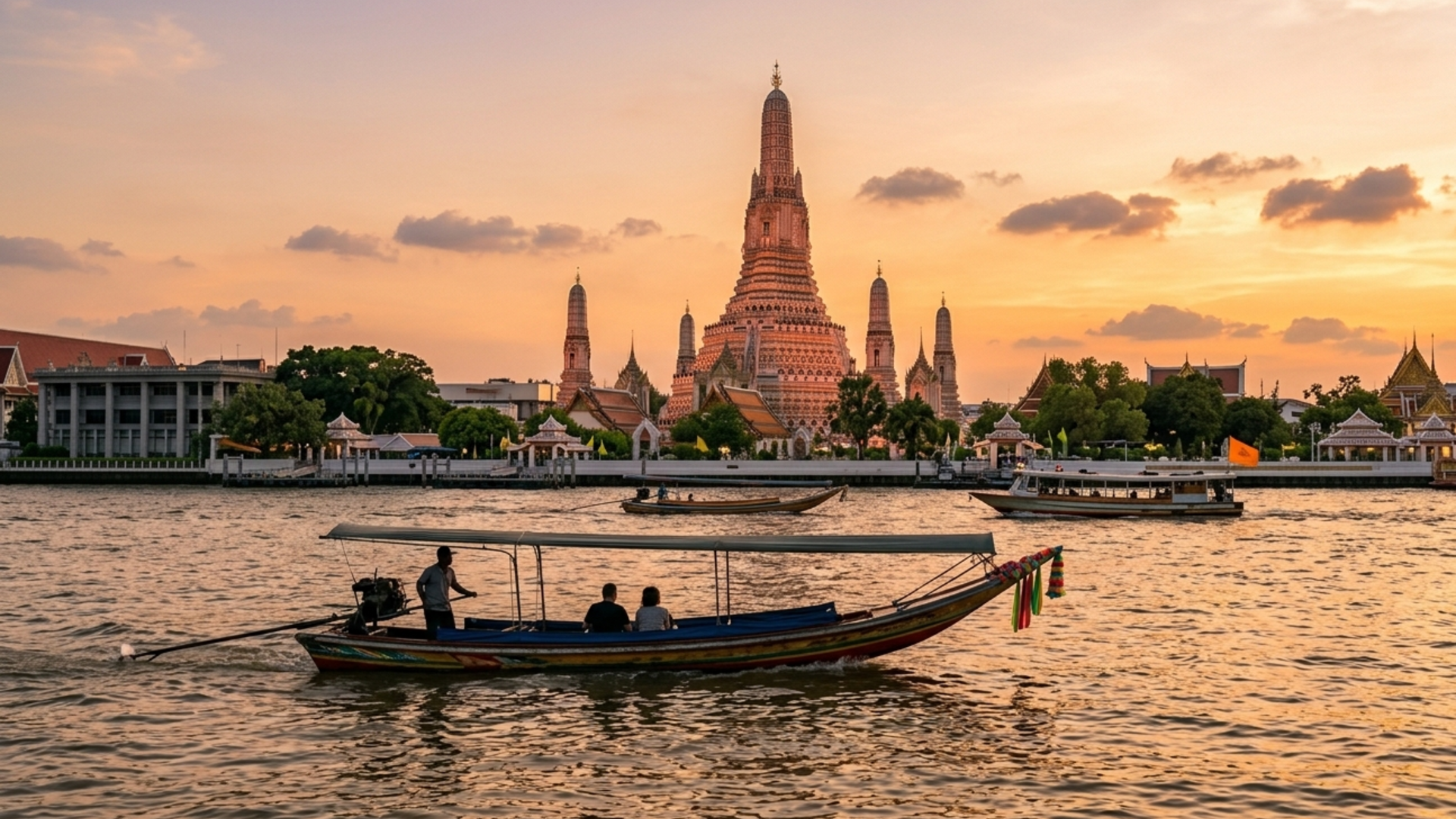
In fact, the Riverside — the banks of the Chao Phraya — is chosen for views and calm. At the same time, the city’s most beautiful hotels are concentrated here. They offer panoramas over the water, a cool breeze and their own piers. The main plus is moving along the river. Shuttle boats and the river express let you bypass the traffic. In the end you reach the main sights in a few minutes.
From the water it is easy to glide to the Old City, Wat Arun and the pier by the Grand Palace. In the evenings dinner cruises ply the river, and on the bank the Asiatique night market runs with its Ferris wheel. From that same Asiatique pier departs a sunset cruise on the Chao Phraya. It comes with a buffet and live music. So it is a comfortable way to see the temples and bridges in golden light. The Riverside is therefore especially good for a honeymoon or a quiet break.
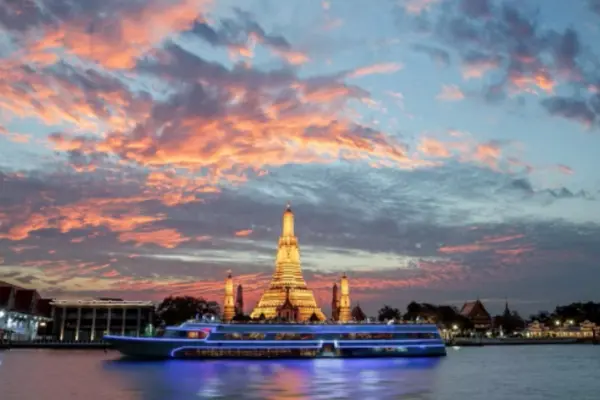
Aim for the river express piers: the orange flag marks the main tourist line, stopping at the key sights. Besides, many riverside hotels run a free shuttle boat to BTS Saphan Taksin, where the Skytrain network takes over. This links the calm waterfront with the rest of the city and removes the area’s main drawback.
Who it suits. Couples, lovers of beautiful views, and anyone who values quiet after a busy day. There is one downside. Some hotels sit a little away from the stations, so reaching the BTS means a shuttle boat or taxi.
The Old City and Khao San: temples and character
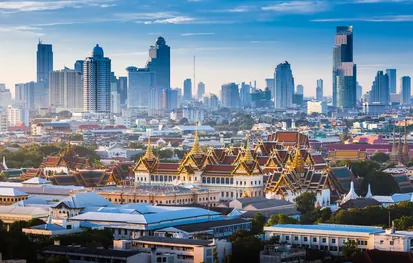
Rattanakosin is the historic heart of Bangkok. Indeed, the main shrines are concentrated here. They include the Grand Palace with the Temple of the Emerald Buddha. Add Wat Pho with its giant Reclining Buddha, and Wat Arun across the river. This is a must-see for a first visit. So it makes sense to view them first thing in the morning. That way you beat the heat and the tour buses.
Nearby is the legendary Khao San Road, the capital of world backpacking. Expect cheap hostels, street food, bars and round-the-clock motion. At the same time, accommodation here is the most budget-friendly in the city. The main drawback is that the BTS does not reach it. Still, new MRT stations nearby have partly solved the problem. To other parts of the city people usually travel by boat or taxi.
Who it suits. Anyone who wants to stay within walking distance of the temples and is not put off by noise, plus travellers on a tight budget. If you plan to visit many shrines, carry clothing that covers shoulders and knees. Without it you are not allowed into the temples. Nearby, on Ratchadamnoen Avenue, stands the world’s oldest Muay Thai stadium. An evening of Thai boxing at Rajadamnern brings 7 to 11 bouts. You also see the Wai Kru ceremony and a live orchestra.

Chinatown (Yaowarat): the city’s street-food capital
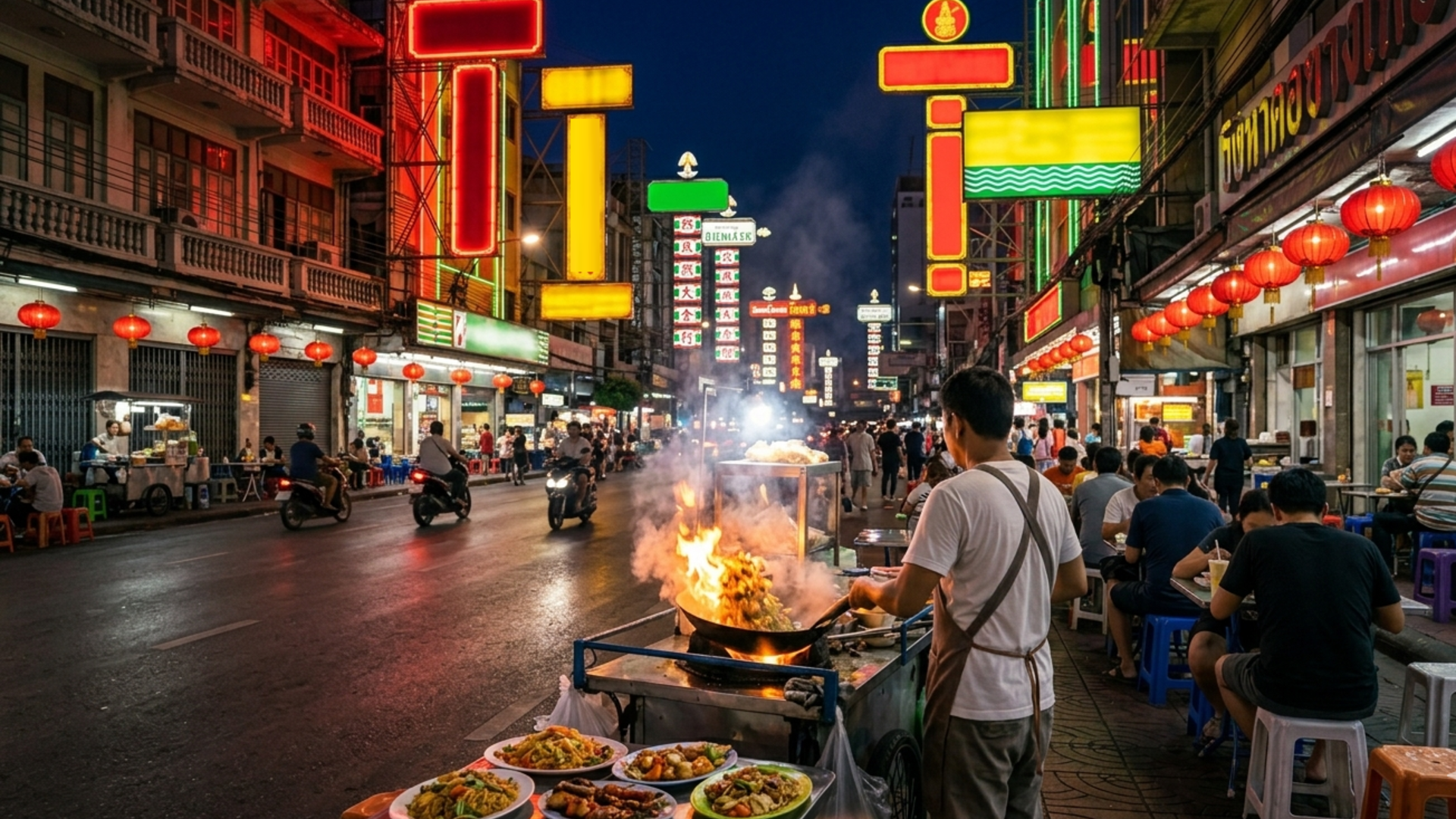
Chinatown, also known as Yaowarat, is the most atmospheric food district in Bangkok. By day it is a working market quarter of narrow lanes. By night the streets light up with neon. Woks sizzle and rows of street kitchens line up. So it is worth coming here for dinner even if you stay elsewhere.
Besides food, Chinatown has its own temples. One is Wat Traimit, home to a 5.5-tonne Golden Buddha — the world’s largest statue of solid gold. Another is the Guan Yin shrine. Getting here has become easier thanks to the MRT stations Wat Mangkon and Sam Yot. The area used to be cut off from transport. So Yaowarat now fits into an itinerary even for a couple of hours in the evening.
Who it suits. Food lovers and fans of night walks with a camera. Accommodation here is cheap and full of character. For families with small children, though, the area may be too loud and cramped.
Siam and Pratunam: the shopping epicentre
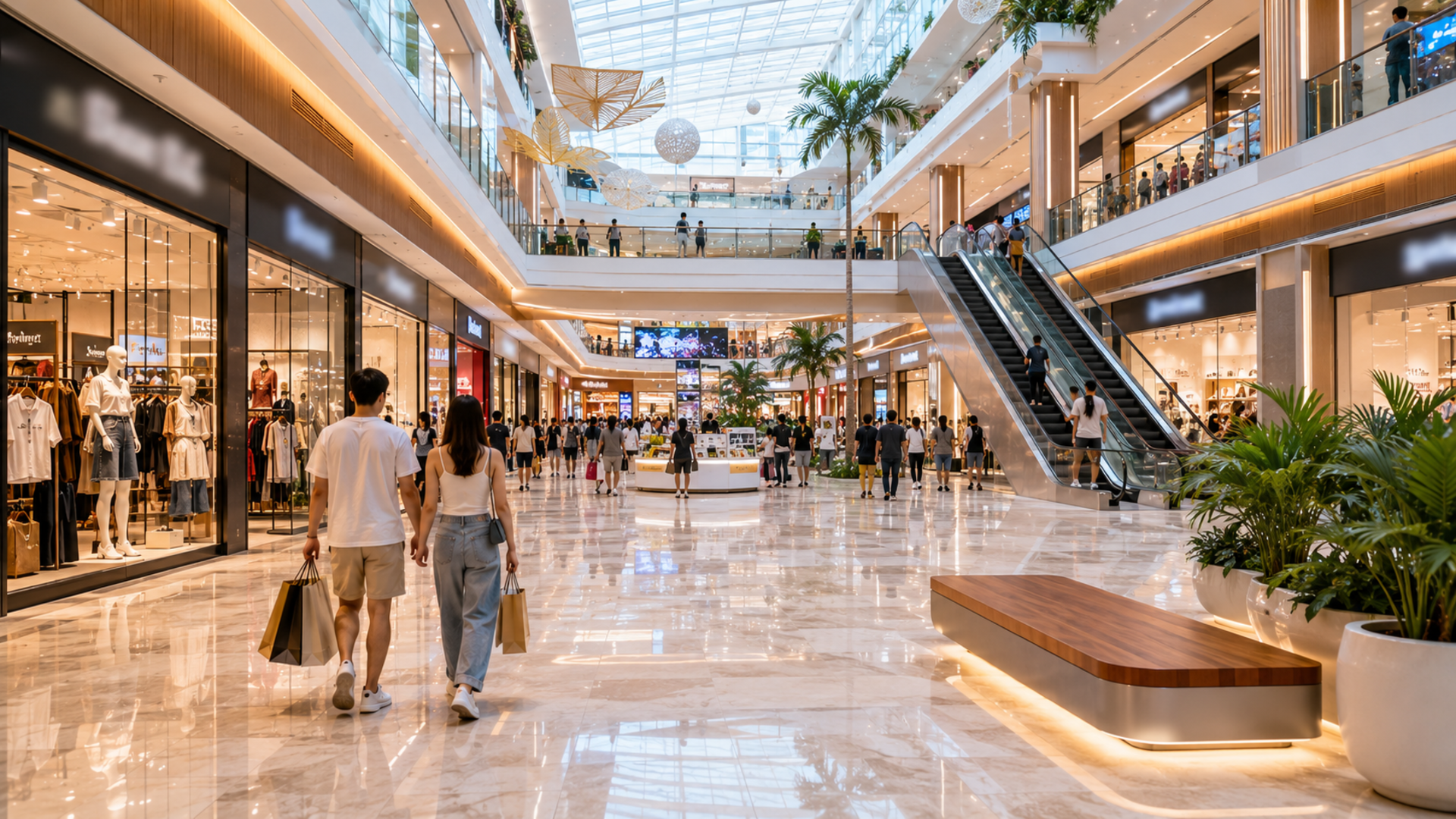
If shopping is the point of the trip, stay around Siam station. This is the city’s main retail hub. Here sit the upscale Siam Paragon with global brands and the legendary MBK Center with thousands of stalls. Add the vast CentralWorld and the youthful Siam Square. Everything is linked by elevated walkways under the BTS line. So you can move between malls without stepping out into the heat.
Neighbouring Pratunam holds the wholesale clothing markets and the Platinum Fashion Mall — people come here for cheap clothes. To the north of the city, the giant Chatuchak market runs on weekends. The nearest stations are BTS Mo Chit, or MRT Chatuchak Park and Kamphaeng Phet. Inside wait more than 15,000 stalls of clothing, antiques, décor and food. A couple of stops to the south lies the calm Ari district (Ari and Sanam Pao stations). It is quiet, leafy, full of cafés and wine bars. So it is a good alternative for those who want to avoid the crowds, yet stay near the metro and close to Chatuchak.
Who it suits. Shoppers and anyone who wants to cover the maximum of stores on foot in a day. The downside of Siam is that it is a purely commercial and rather faceless zone, without an evening neighbourhood life.
Transport: the essentials in brief
To begin with, a detailed breakdown of the BTS, MRT, river boats and airport transfers will go into a separate guide. Here is only what affects your choice of area. The criterion for convenient accommodation in Bangkok is simple. The nearest BTS or MRT station should be a 5–10 minute walk away. Then you bypass the traffic and reach any spot quickly. The Riverside and the Old City are also served by boats along the Chao Phraya. And before you fly, do not forget the digital arrival card. The details are in our TDAC guide.
Conclusion: how to choose your area in Bangkok
Ultimately, there is no universal «best» area in Bangkok — there is the one that fits your particular trip. For a first acquaintance and easy logistics, take Sukhumvit. Romance and views mean the Riverside. For temples and character, head to the Old City. Food and shopping, meanwhile, are within reach from anywhere. Chinatown and Siam are easy to get to by metro.
If in doubt, start from two questions. Is a BTS or MRT station nearby, and what matters most — quiet, views, nightlife or shopping? Answer them and you immediately cut half the options. And if you are on Phuket and want the highlights in a single day, there is a one-day air tour to Bangkok. It covers Ayutthaya, Wat Arun, Wat Pho and a Chao Phraya cruise. The full catalogue is in the Bangkok excursions section.
Frequently asked questions
Which area in Bangkok is best for a first visit?
Sukhumvit is the most convenient for transport — both BTS and MRT. It also has a huge choice of hotels at any budget and plenty of restaurants. The alternative is the Riverside, if views and calm matter more.
Where can you stay cheaply in Bangkok?
The most affordable accommodation is on Khao San Road in the Old City and in Chinatown. These are budget hostels and guesthouses, but bear in mind that the BTS Skytrain does not reach Khao San.
Which area in Bangkok has the most interesting food?
Chinatown (Yaowarat) — it is the city’s main street-food quarter, especially in the evening. Thonglor and Ekkamai in Sukhumvit are good for higher-end restaurants and Japanese cuisine.
Where is best to stay to be close to the temples?
Stay in the Old City (Rattanakosin). The Grand Palace, Wat Pho and Wat Arun are within walking distance, or a few minutes by boat across the river.
Do you need to rent a car in Bangkok?
No. Because of the traffic it is much faster to move by BTS, MRT and river boats. It is enough to choose a hotel near a metro station.