













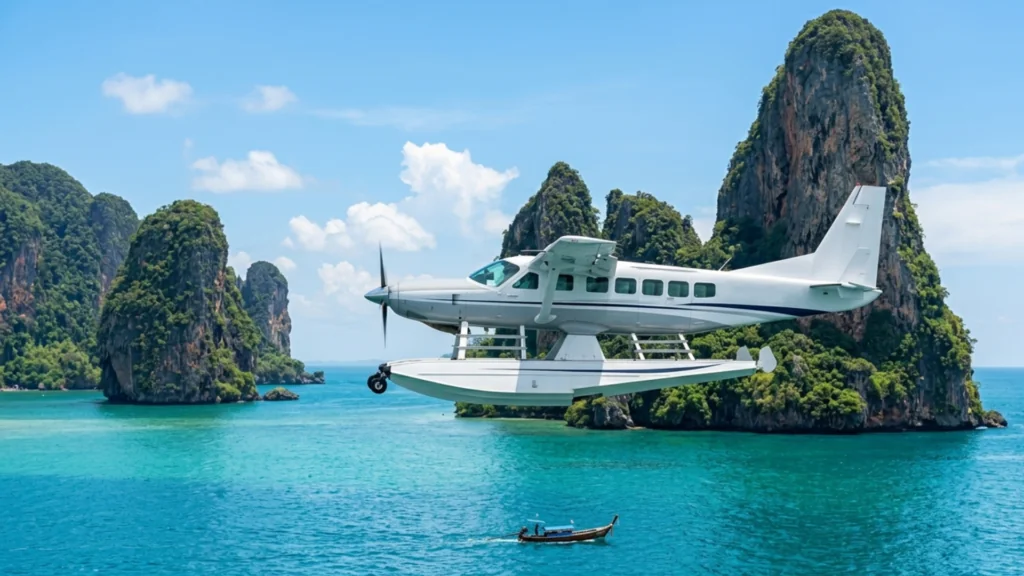
In short: the Krabi–Phuket seaplane has the green light. On 9 June 2026, Thailand’s deputy transport minister set a target to launch pilot flights between Krabi and Phuket provinces before the end of 2026. Operator Thai Seaplane goes first; a one-way ticket is promised at no more than about 4,849 baht (under US$150), and the Phuket–Krabi hop should take roughly 20 minutes instead of three hours by road. That said, the «green light» is still a target plus approved sites — not a published timetable. Here is the fact-checked picture of what has been approved and what to realistically expect.
What was actually approved
It is worth separating two meanings of the phrase «green light.» This is not «buy a ticket tomorrow.» It refers to two concrete steps taken in 2025–2026.
First, a legal framework now exists. In 2025, the Civil Aviation Authority of Thailand (CAAT) introduced rules for seaplane operations and temporary water-landing facilities. That is precisely what let private operators move from plans to real flight preparation.
Second, there is political will and a deadline. On 9 June 2026, deputy government spokesperson Lalida Phiriswattana said the government is prioritising aviation connectivity. Deputy Transport Minister Pattaraphong Praphatprasit, after inspecting Krabi airport, confirmed the goal: pilot Krabi–Phuket seaplane flights should begin before the end of 2026. Krabi International Airport has been chosen as the country’s first pilot site.
To coordinate the rollout, the Ministry of Transport is forming a Strategic Integration Committee for the Development of Water-Based Aircraft Operations. It will include government bodies, aviation specialists and private firms, with flight safety named as the priority.
The Krabi–Phuket route: 20 minutes instead of 3 hours
The main reason for the buzz is time saved. Today the road trip from Phuket to Krabi takes about three hours: bridges, traffic and winding coastal roads. A seaplane cuts that to roughly 20 minutes.
Thai Seaplane says any flight within the Andaman region will take no more than 90 minutes. At launch, the network links three points: Phuket airport, Cape Panwa on the south of the island, and Krabi airport. That is the core «Andaman loop» from which other routes will grow.
So the Krabi–Phuket seaplane is more than a social-media photo op. For a traveller on a tight schedule, the difference between 20 minutes and three hours each way is effectively a whole extra day by the sea.
Who will fly the routes
Three players appear in the project, and their roles are worth distinguishing.
Thai Seaplane is Thailand’s first commercial seaplane operator. The company was registered on 3 October 2023 and, according to chief executive Kasinpoj Rodkho, spent six years preparing, including pilot training in the United States and Germany. Investment has been raised to about 300 million baht. Its first aircraft, callsign «PP,» has been imported, and docking facilities for passenger transfers are complete in Krabi. The company targets a September 2026 start and plans to grow its fleet from one aircraft to five within three years.
Siam Seaplane is the second private operator. On 21 May 2026, the Krabi Provincial Marine and Coastal Resources Committee approved three temporary landing sites for the company, including one near Tubkaek Beach. Officials stressed that safety, floating-dock distances, impact on marine resources and shared use of the sea with local communities remain top priorities.
AeroThai (Aeronautical Radio of Thailand) is the state air-navigation agency. In autumn 2025 it ran sandbox seaplane trials in Phuket and Trang and studied the environmental impact: engine noise, possible oil leaks and effects on coral reefs. AeroThai aimed for official service around mid-2026.
Fares, schedule and routes
Here are the numbers that matter to travellers.
A one-way Phuket–Krabi ticket is promised at no more than about 4,849 baht (under US$150) per seat. That is well above a budget ferry or minibus, and the company frames the service as premium. Thai Seaplane expects foreign visitors to make up roughly 70% of passengers, with Thai travellers the remaining 30%.
On frequency, the Initial Environmental Examination (IEE) for the Phuket water aerodrome allowed for up to 28 flights per day in 2026, rising to 42 by 2027–2030. The aerodrome is expected to operate from roughly 06:00 to 19:00.
Beyond Krabi–Phuket, a wider Andaman network is planned: Phuket–Phi Phi, Krabi–Phi Phi, Phuket–Similan Islands and Phuket–Koh Lipe. In other words, the Krabi–Phuket seaplane is only the first link in a future island network.
When to realistically expect the launch
This calls for a sober view. «Before the end of 2026» is a ministry target, not a confirmed departure date.
Context helps. A similar plan was floated before: official service was promised by mid-2026, yet by early summer the relevant departments had given no fresh updates. One operator is still awaiting environmental approvals. So the cautious scenario is this: trial and demonstration flights come first, while a full regular timetable with ticket sales ramps up later.
There is also a seasonal factor. During the rainy season and monsoon swell (roughly May to October), landing on open water in the Andaman Sea gets harder. It is logical that some routes will first be tied to sheltered bays and the dry season.
The takeaway is simple: it is worth watching the announcements, but it is too early to build a trip around a guaranteed seaplane connection. Keep the usual ferry, bus or domestic flight as a backup.
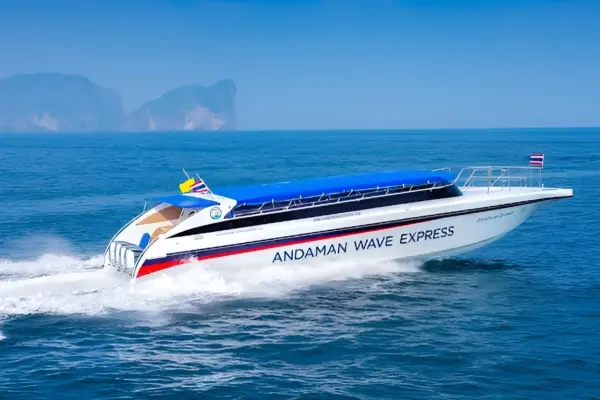
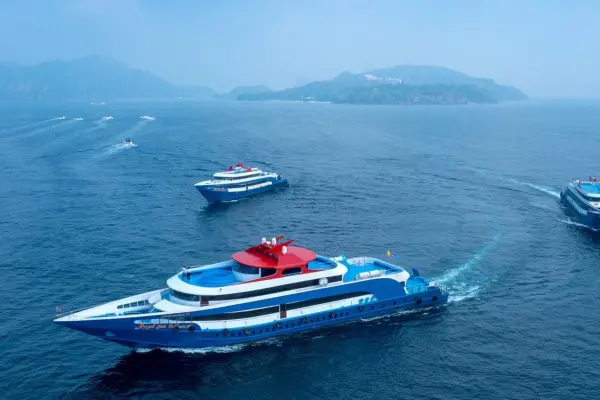
By the way, a fast sea transfer between Krabi and Phuket is already available today:
Environment and open questions
The project is not without concerns, and it is fair to spell them out.
Krabi authorities and marine agencies named the risk areas directly: propeller and engine noise, possible fuel and oil leaks, pressure on coral reefs, and competition for sea space with fishers and existing marine tours. Public consultations have already been held for the Phuket project, including with residents of the Panwa area.
That is exactly why the sites are temporary and approvals proceed step by step. For passengers, this means the final route map may differ from the initial plan — some points will be approved, others deferred.
What it means for travellers
If the Krabi–Phuket seaplane does enter regular service, the biggest winners will be those who value time and pack a full itinerary.
Andaman island destinations — Phi Phi, the Similans, the bays of Phang Nga — become reachable within a single daylight day. That pairs neatly with boat trips and snorkelling: less time in transit, more time on the water. You can build an active sea day from the Thailand land and sea excursions catalogue.
For fans of Phang Nga Bay scenery, the flight over the limestone karsts is an attraction in itself — and on the ground the theme continues with the James Bond Island tour. If you are aiming for the Similans, keep the park’s seasonality in mind; details are in our breakdown of the Similan Islands closure.
And if the seaplane brings you to Krabi, line up a few local trips in advance:




The Tisland Travel team is tracking the project and will update this article as soon as confirmed dates and fares appear.
Frequently asked questions
When will the Krabi–Phuket seaplane launch?
The authorities’ target is pilot flights before the end of 2026. Operator Thai Seaplane has cited a «by September 2026» aim. But these are planned timelines, not a confirmed ticket-sale date: one operator is still awaiting environmental approvals.
How much is a Phuket–Krabi seaplane ticket?
According to Thai Seaplane, no more than about 4,849 baht (under US$150) per seat one way. The service is positioned as premium, pricier than a ferry or minibus.
How long is the Phuket to Krabi seaplane flight?
About 20 minutes, versus roughly three hours by road. The operator promises any Andaman-region flight will fit within 90 minutes.
Which routes are planned besides Krabi–Phuket?
A wider Andaman network is planned: Phuket–Phi Phi, Krabi–Phi Phi, Phuket–Similan Islands and Phuket–Koh Lipe. At launch it links Phuket airport, Cape Panwa and Krabi airport.
Who will operate the flights?
Private operator Thai Seaplane goes first. The second player is Siam Seaplane, which won approval for landing sites in Krabi. State agency AeroThai ran seaplane trials in Phuket and Trang.
Are seaplanes safe?
The Civil Aviation Authority of Thailand (CAAT) introduced dedicated rules for seaplanes and water-landing facilities back in 2025, and flight safety is named as the project’s priority. Regular commercial flights start only after all approvals are in place.
Can I book a ticket already?
Not yet. As of June 2026, there is no official online sale of regular flights. Trial and demonstration flights are expected first, with a full timetable to follow.
Should I plan a trip around the seaplane?
For now, treat it as a nice bonus rather than a guaranteed option. Keep a ferry, bus or domestic flight as a backup, especially in the rainy season.
Sources
- The Nation Thailand — AeroThai trial operations in Phuket and Trang: nationthailand.com
- Siam Seaplane (official operator site): siamseaplane.com
- Civil Aviation Authority of Thailand (CAAT, regulator): caat.or.th
- Tourism Authority of Thailand (TAT): tourismthailand.org