






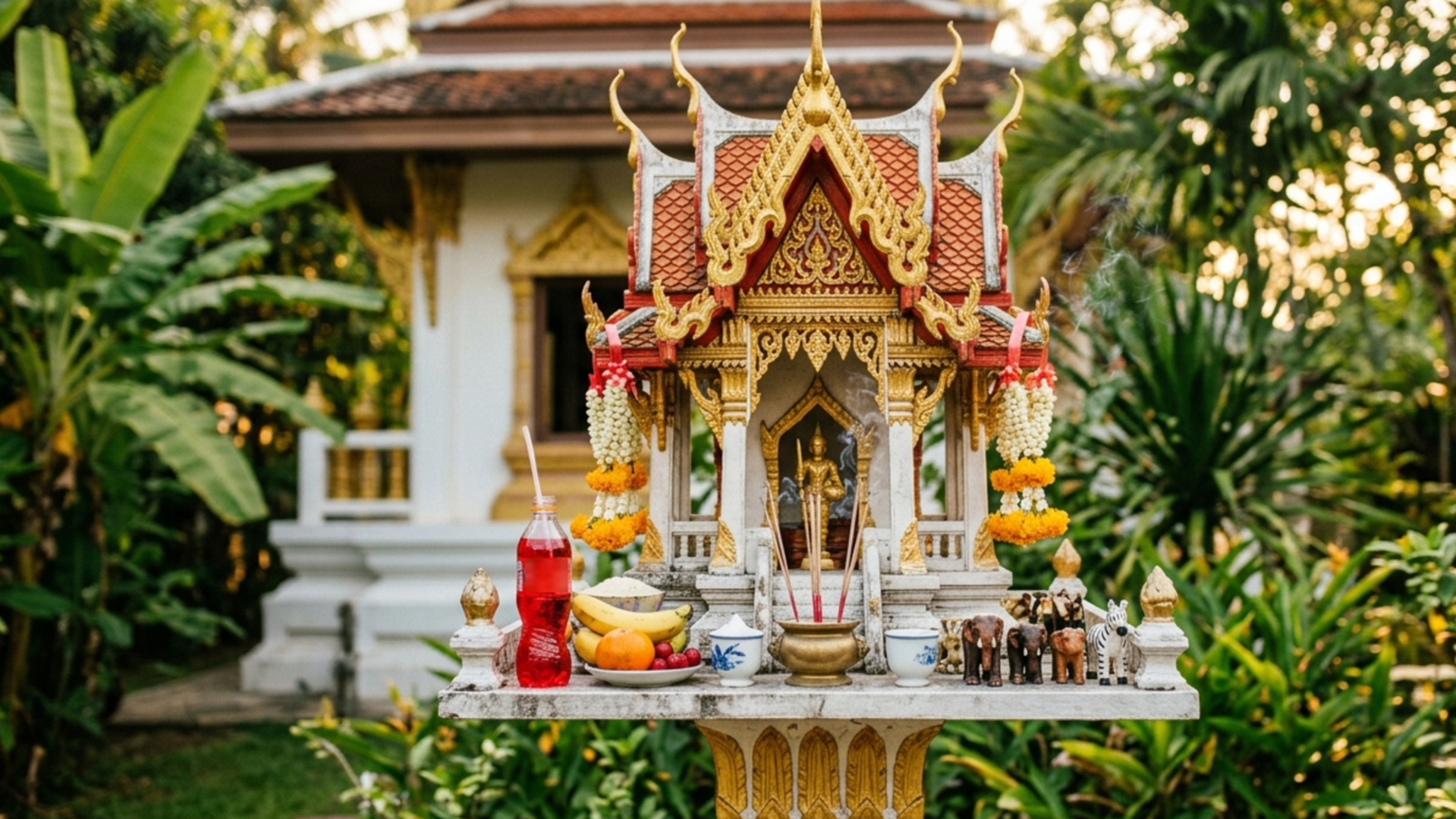
Step out of Phuket airport and you have already seen them. They are by a hotel entrance, on the corner of a 7-Eleven, in front of a restaurant, at a petrol station. A miniature temple sits on a pillar, draped in jasmine garlands. Beside it stand smouldering incense sticks and a small bottle of bright red soda. These are spirit houses. In fact, Thailand has them by the million.
In short, a spirit house is a separate «home» for the guardian spirit of a plot of land. Thais install it to keep that spirit content and protective rather than harmful. In Thai it is called san phra phum (ศาลพระภูมิ), «the dwelling of the lord of the place.» Moreover, behind it lies a belief older than both Buddhism and Hinduism. It still shapes how Thais build houses and open businesses.
Where the tradition comes from: animism plus Brahmanism
The roots of spirit houses lie in animism. This is the ancient belief that every place, tree, river and stone has its own spirit. In fact, the idea existed in Southeast Asia long before Buddhism and Hinduism arrived. When the new religions spread through the region, they did not erase the old beliefs. Instead, they blended with them, producing a distinctly Thai mix.
The shape of the house came largely from Brahmanism, the priestly strand of Hinduism. It deeply influenced old Siam. That is why you find characters from Hindu mythology around these shrines: Indra (Phra In), Brahma (Phra Phrom), sometimes the elephant-headed Ganesha. The main resident of a classic spirit house is the guardian spirit Phra Phum. Indeed, he is respectfully called Phra Chai Mongkon.
The logic is simple and very human. When you build a house, you occupy land. That land already belonged to someone — or rather, to some spirit. So, to avoid offending the former «owner», you build it a fine home next door. In addition, you regularly «invite it over» with offerings. As a result, a satisfied spirit becomes a protector, while an offended one brings bad luck.
The two main types (and how they differ)
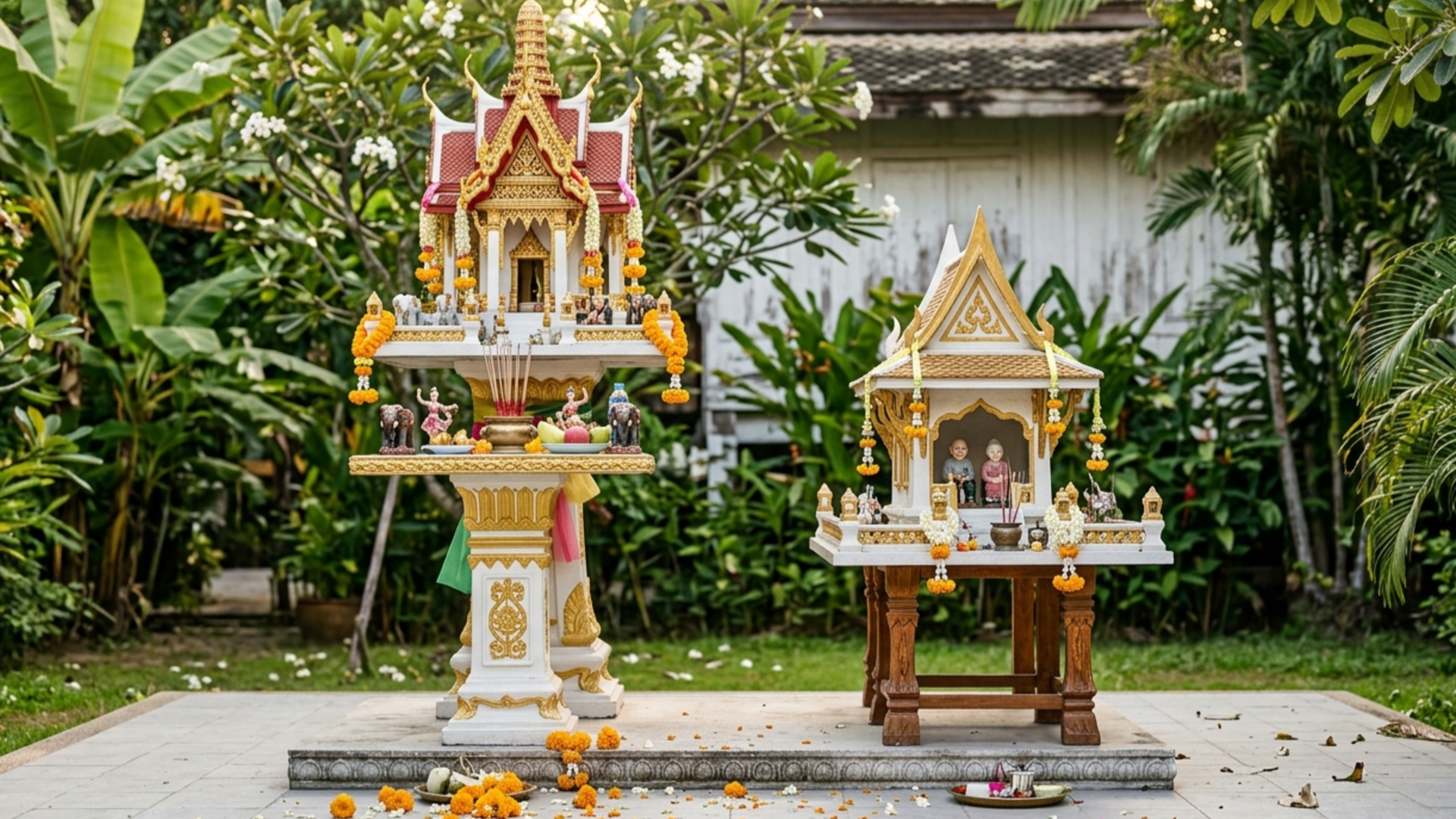
To a visitor every shrine looks the same, but Thais see the difference at a glance.
San phra phum is the house of the place’s guardian spirit. It usually stands on a single column, like a small temple on a leg. Inside sits a figure of the lord of the land, Phra Chai Mongkon. In his hands are a sword and a purse: the sword for protection, the purse for prosperity. Thus it is the plot’s main charm.
San chao thi is the house of the spirits of the land and ancestors. It more often stands on four supports, shaped like a traditional Thai home. Inside live the grandfather and grandmother spirits, affectionately called Ta and Yai. They are the previous occupants of the place. Besides, san chao thi is set lower than san phra phum, and the two frequently share a single yard.
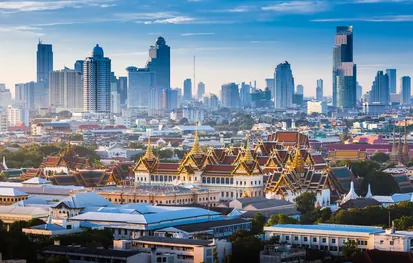
There is also a common third type — san phra phrom, a house for the four-faced Brahma. For example, its most famous version is the Erawan Shrine in Bangkok. It was built in the mid-1950s beside the hotel of the same name. Today it draws more people than many of the city’s temples. The reason is simple: the four-faced Brahma is believed to grant wishes. Thus a small roadside genre grows into a national landmark.
What stands inside and around the house
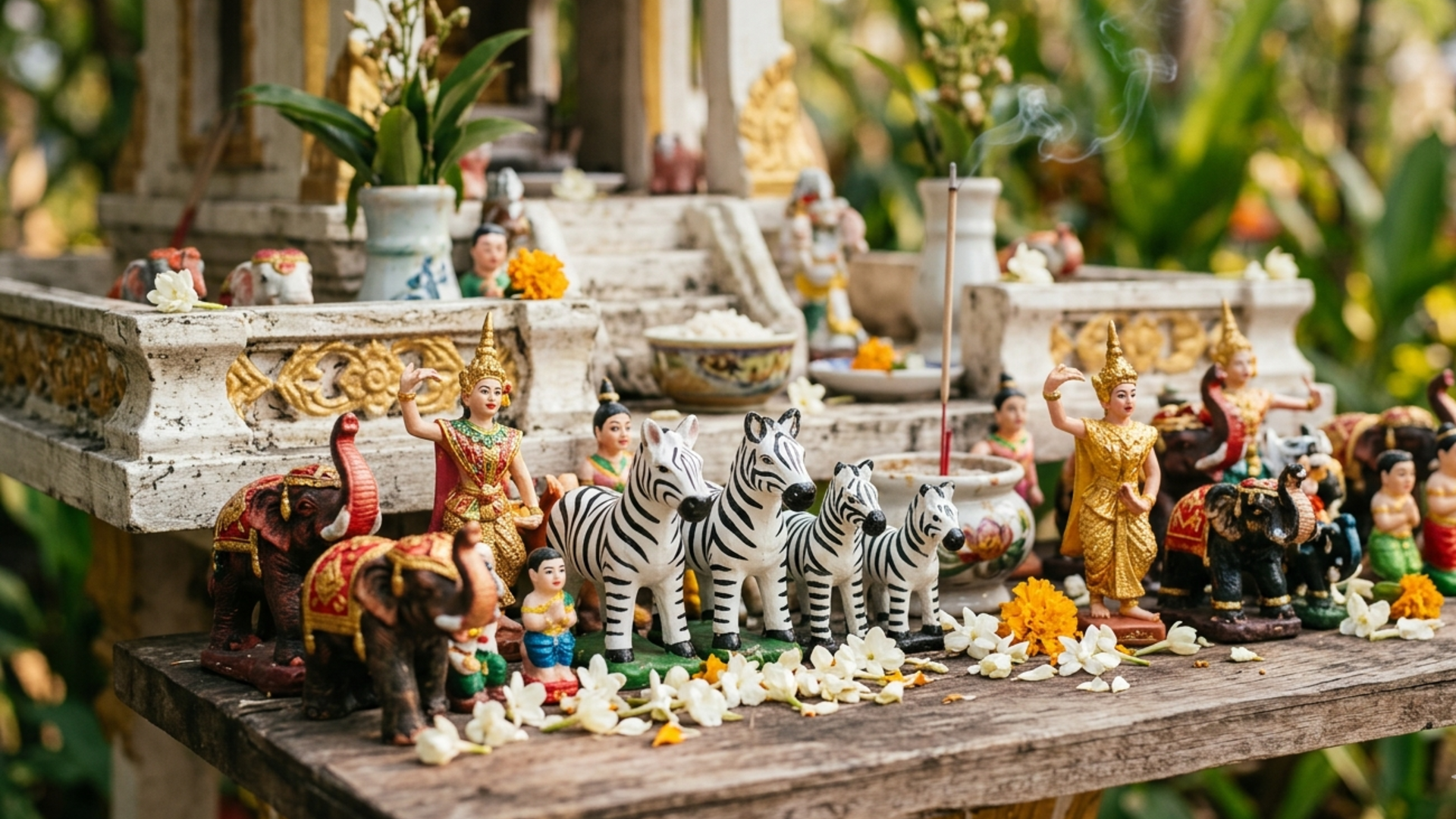
Look closely at any spirit house and you will find a whole little world, each item with a meaning.
Inside is the guardian figure, sometimes a tiny Buddha or a Hindu deity. For example, around the base Thais arrange offering figurines: elephants (strength and luck), dancers (to entertain the spirit), small servants and horses. One puzzle for visitors is the zebra figurines. In Thai the zebra is linked to the zebra crossing, that is, to road safety. Legend has it that a driver came home safely and thanked the spirit with a zebra figurine. So the custom caught on. Now the striped horses are offered as a plea to be kept safe on the road.
Nearby there is almost always smouldering incense. In addition, you will see jasmine garlands (phuang malai), little cups of rice, fruit and sweets. And of course the red soda — most often strawberry Fanta.
Why red Fanta, specifically
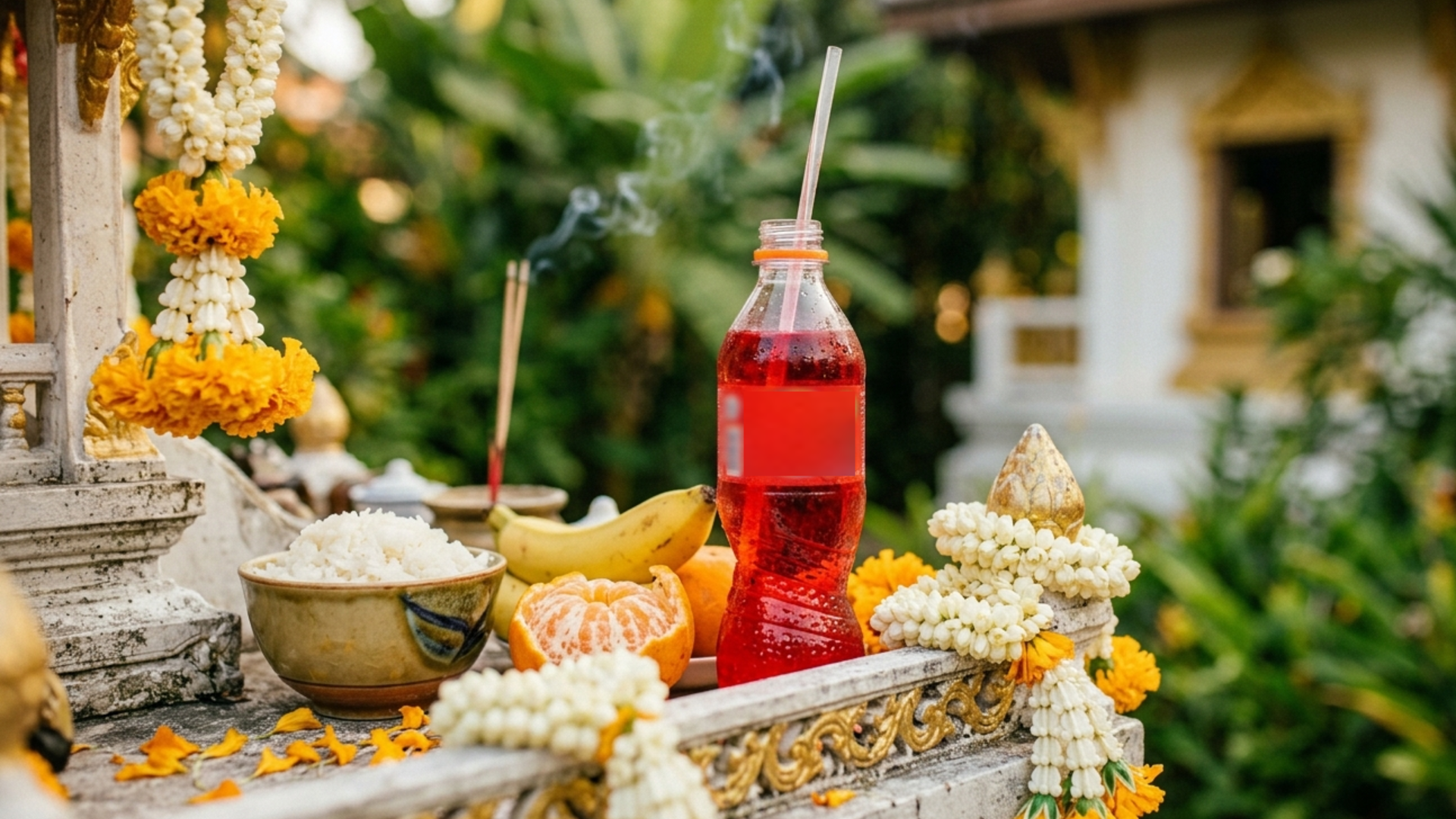
This is perhaps the most photogenic detail on a Thai street. And there is a sound story behind it. In ancient times, animal blood was sacrificed to spirits. Over time the blood offerings disappeared, but the symbol stayed. That is, a bright red drink stood in for blood. Two more reasons line up alongside it. First, spirits are believed to like sweet things. Second, red is considered lucky in Chinese tradition, which many Thai families share.
Historians of Thai daily life add another detail. For example, before the soft-drink era, water for offerings was tinted with a pinkish herbal blend called nam ya thai thip. A factory bottle of Fanta does exactly the same thing, without the fuss. Thus a global brand slotted neatly into a ritual several centuries old.
How spirit houses are installed: more serious than it looks
You cannot just put a spirit house «wherever it fits». Therefore the spot and direction are worked out in advance. Traditionally, a Brahmin priest or knowledgeable elder is consulted. By astrology, he determines the auspicious date, time and compass direction.
The placement rules are quite specific. For example, the shadow of the main building must never fall on the house. So it often goes in the southeast corner of the property. It faces east or north, the most auspicious directions. In addition, it is not placed to the left of the front door. It is not turned toward a road, a toilet or the home’s entrance. And it stays at least a metre from a wall or fence. Finally, a consecration ceremony with chanting, incense and offerings «invites» the spirit into its new home.
This is why you rarely see an abandoned spirit house in Thailand. They are tended daily, with fresh garlands and drinks. Moreover, an old or damaged house is never thrown in the rubbish. Instead, it is carried to special spirit-house «graveyards», where such shrines stand by the dozen.
Where to see spirit houses on Phuket
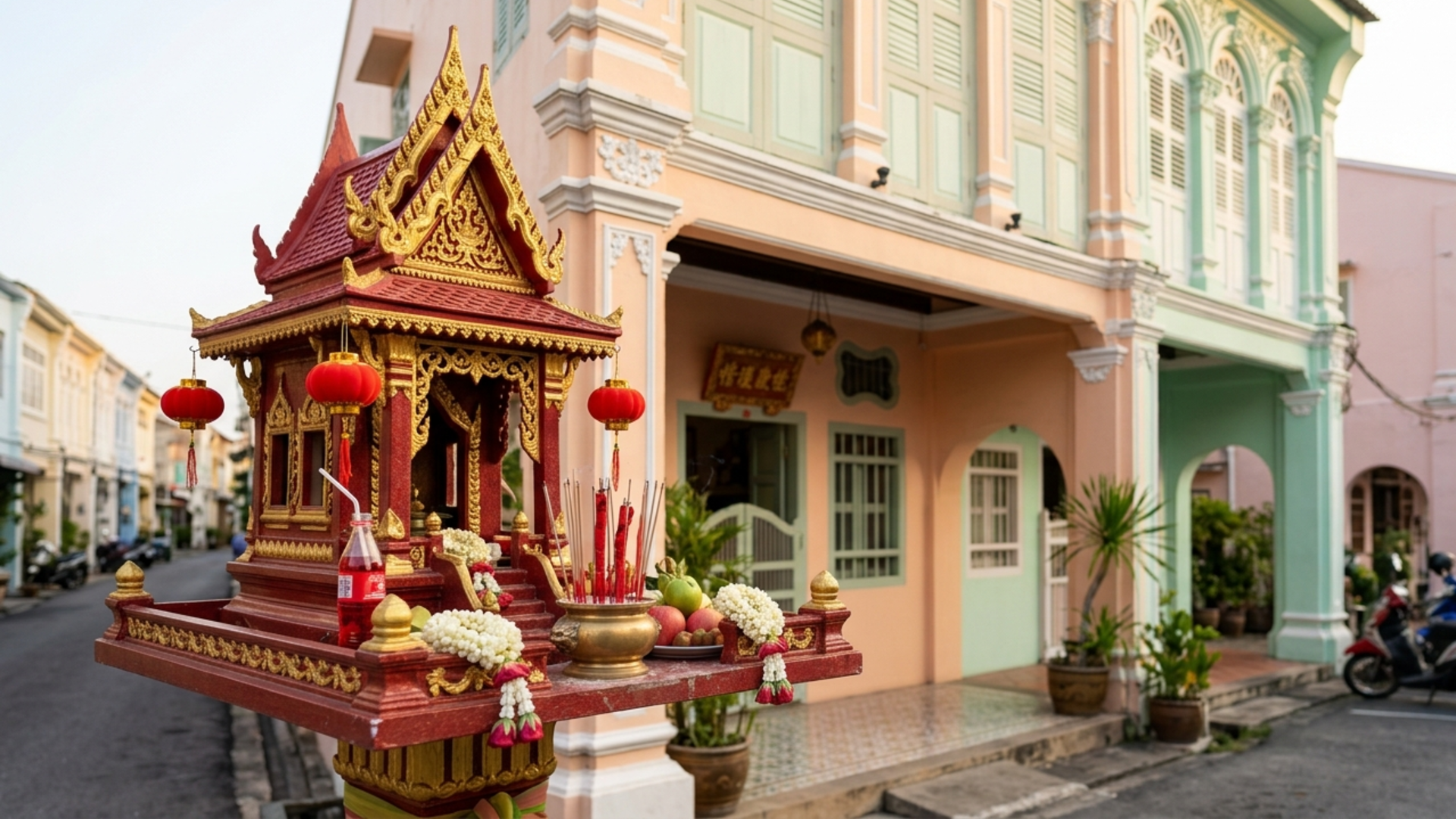
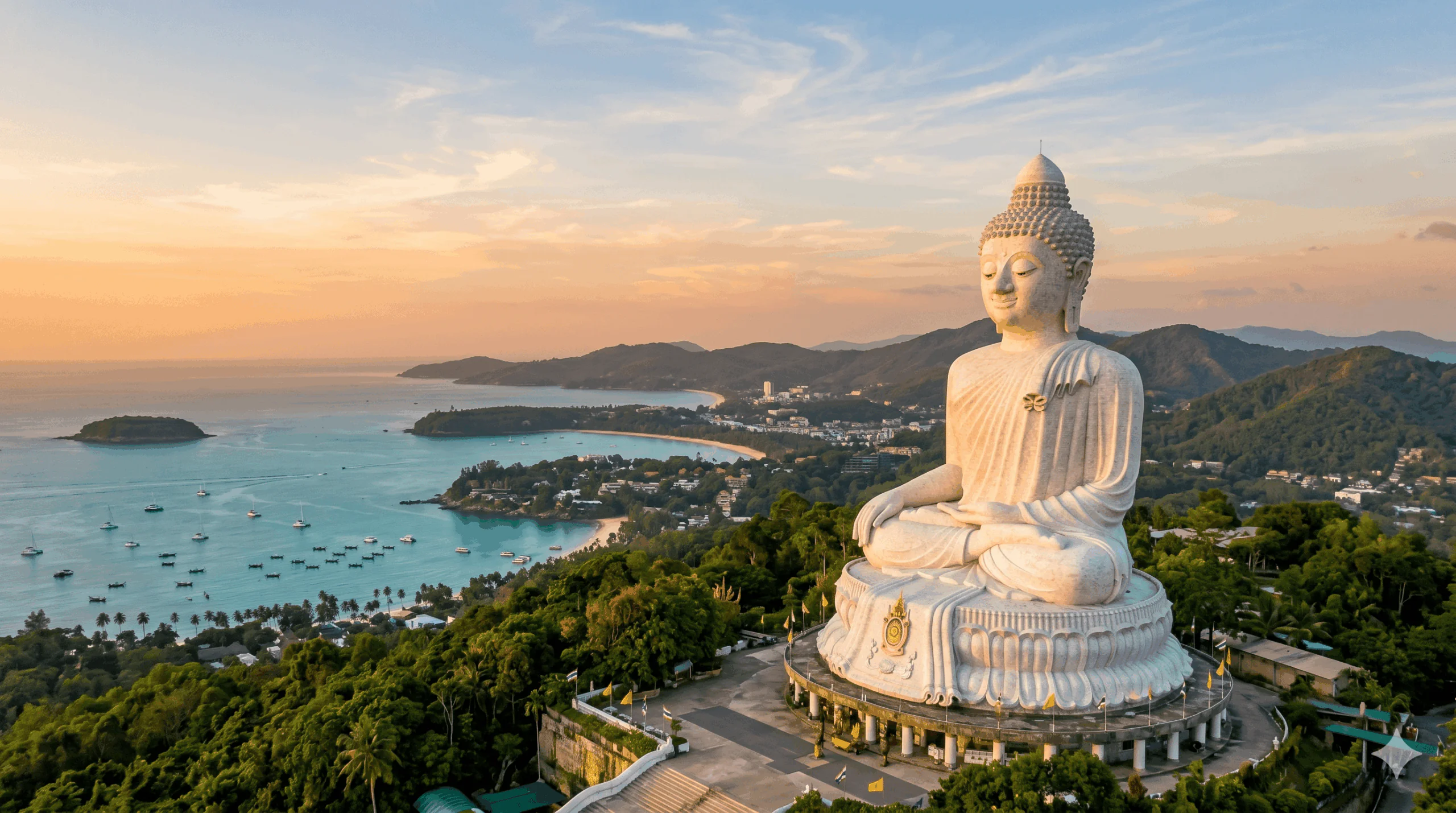
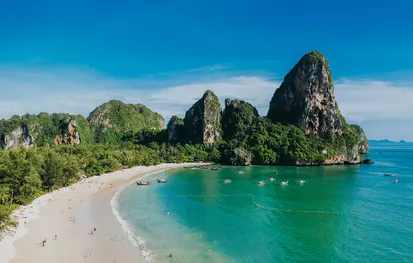
On Phuket spirit houses surround you everywhere. But the most striking examples cluster around major temples and in the historic centre. For example, Wat Chalong is the island’s most important Buddhist temple. It is a whole complex of richly decorated shrines. Here the spirit-house tradition sits beside grand temple architecture. The Big Buddha on Nakkerd Hill has its own guardians of the place too. And in Phuket Old Town, the spirit houses are especially ornate. The Chinese influence is strong here, so there is extra red, gold and incense around them.
The easiest way to take all this in is a guided island sightseeing tour. In addition, a guide explains what you are looking at and how to behave around the shrines.


Beyond Phuket: the temples of Krabi and more
Do you want to see how the spirit tradition fits into a larger temple landscape? Then it is worth crossing into neighbouring Krabi province. For example, here you will find the Tiger Cave Temple (Wat Tham Suea), a Buddhist cave monastery north-northeast of Krabi town. It is famous for the tiger paw prints in the rock, its towering Buddha statues and a steep climb of 1,237 steps. Besides, on the way to Krabi’s temples, spirit houses turn up at every turn — by cave entrances, beneath old trees, at viewpoints.
Nature and spirits are closely tied here. For example, many shrines stand beside ancient trees and springs. Animism credits these with a soul of their own. You feel it clearly on trips into the region’s protected corners.


How to behave as a visitor near a spirit house
The main rule is simple. Treat the shrine like any religious object, even at a shop’s entrance. Of course, no one expects a visitor to pray or leave offerings. Respect is enough.
Now for what not to do. Do not touch the house or its figurines. Never climb on the pedestal or rearrange items. And do not use the shrine as a backdrop for joke poses or selfies. For example, if someone is praying, wait until they finish and stay out of the frame. Photographing the shrine itself is usually fine, but without irreverence.
Do you feel moved to make an offering out of respect? Then choose something simple: a flower garland, a piece of fruit, a bottle of water, or that same red Fanta. Place it gently and do not step onto the platform in front of the house. Also, never point the soles of your feet at the shrine. In Thai culture the feet are the «unclean» part of the body, so aiming them at something sacred is rude.
Spirit houses are not an exotic attraction. Rather, they are a living belief system that Thais use every day. Once you understand them, you stop seeing mere «doll’s houses». Instead, you start reading a Thai street the way locals do. Here someone asked for luck, there they gave thanks for a safe drive, and over there they simply treated the spirit to something sweet. The easiest way to see it for yourself is on a Phuket sightseeing tour.
Frequently asked questions
What is a Thai spirit house?
It is a small shrine on a pedestal that Thais place beside a home, hotel, shop or office. In Thai it is called san phra phum. The belief is that every plot of land has a guardian spirit. The little house gives that spirit its own dwelling, so it stays content and protects people instead of troubling them. In return, the spirit is offered incense, garlands, food and drinks.
Why do spirit houses get red Fanta?
The red colour of the soda symbolically replaces the blood once sacrificed to spirits. Spirits are also believed to enjoy sweet things, and red is considered lucky in Chinese tradition. Before soft drinks, water for offerings was tinted pink with a herbal blend called nam ya thai thip — bottled strawberry Fanta now does the same job with far less effort.
Why are there zebra figurines at spirit houses?
A zebra is linked to the zebra crossing and therefore to road safety. According to a popular story, a driver returned home safely and thanked the spirit with a zebra figurine. The custom spread. Zebras are now offered as a request for protection on the road, alongside figurines of elephants, dancers and small servants.
Can you take photos of spirit houses?
Yes, photographing the shrine itself is generally fine. But it is a religious object: do not touch it, climb on the pedestal, or use it as a backdrop for selfies or joke poses. If someone is praying or arranging offerings, wait until they finish and stay out of the frame.
What is the difference between san phra phum and san chao thi?
San phra phum is the house of the land’s guardian spirit, usually on a single pillar, holding a figure of Phra Chai Mongkon. San chao thi is a four-pillared structure for the spirits of the land and ancestors. It houses a grandfather and grandmother (Ta and Yai), the former occupants of the plot. The two are often placed together in one yard, with the san chao thi set slightly lower.