










In short: Since April 22, 2025, Thai law has banned all physical contact with corals and marine animals. Tourists cannot stir sediment, feed fish, or walk on soft reef bottoms. On May 9, 2026, a group of tourists speared parrotfish off Kata Beach in Phuket — the species is protected under a 2024 provincial regulation, and the fine reaches 100,000 baht and up to one year in prison. Inside marine national parks (Similan, Phi Phi, Surin), the same act costs up to 500,000 baht and five years in jail. Below: which species are protected, the penalty table, and seven snorkeling rules so your Phuket trip ends in photos rather than a court summons.
In 15 years of running boats around Phuket, the Tisland Travel team has seen everything: tourists pocketing starfish, posing for «turtle selfies» with a hand on the carapace, breaking off coral as a souvenir. The old fix was a stern word from the guide on the boat. The new one is a Marine Police report. Patrols around Kata, Karon, and inside the national parks have been stepped up, and the fines now run higher than most short-haul flights home.
Key facts
- May 9, 2026: parrotfish speared off Kata Beach — patrols increased, fines reach 100,000 baht
- April 22, 2025: Thailand’s nationwide rules took effect — no touching corals or marine animals
- National Park Act: up to 500,000 baht and 5 years in prison for harvesting in a national park
- Snorkeling depth: minimum 2 meters of water above the reef
- Life vest: mandatory unless you hold a recognized freediving certification
Primary sources: Khaosod English (May 11, 2026) · TAT Newsroom (May 2025) · The Thaiger (May 10, 2026). All links verified May 19, 2026.
What happened off Kata Beach on May 9, 2026
On the evening of May 9, 2026, a group of tourists went spearfishing at the southern end of Kata Beach near the Phuket Ska Bar. They speared several parrotfish and brought them ashore. The video spread across Thai social media within hours. On May 10, four agencies inspected the area together: the Department of Marine and Coastal Resources (DMCR), Marine Police Division 8, Tourist Police Division 2, and Karon Municipality. No one was arrested at the scene — the tourists had already left — but patrols around Kata and Karon were increased, and warning signs went up on May 11.
This is not an isolated incident. In parallel, Phuket City social media is circulating videos of tourists posing with starfish at Kata Beach. Under a 2024 provincial regulation, parrotfish (family Scaridae) is listed separately from the national protected-species list — specifically to protect the coral reefs around Phuket.
Why so strict? Parrotfish are the reef’s primary «gardener»: they eat the algae that would otherwise smother the coral. Without them, a reef collapses in five to seven years. Authorities in Kata and Karon lost several meters of coral belt in one snorkeling-season stretch, which is why the province added its own regulation on top of the national framework.
Which marine species Thai law protects in 2026
As of 2026, protected status covers all hard and soft corals, all sea turtle species, parrotfish (Scaridae) under Phuket’s provincial rule, giant clams (Tridacna), and certain sharks and rays. Starfish are not formally on the protected-species list, but a separate 2025 rule bans lifting any marine animal out of the water — so practical protection extends to them too.
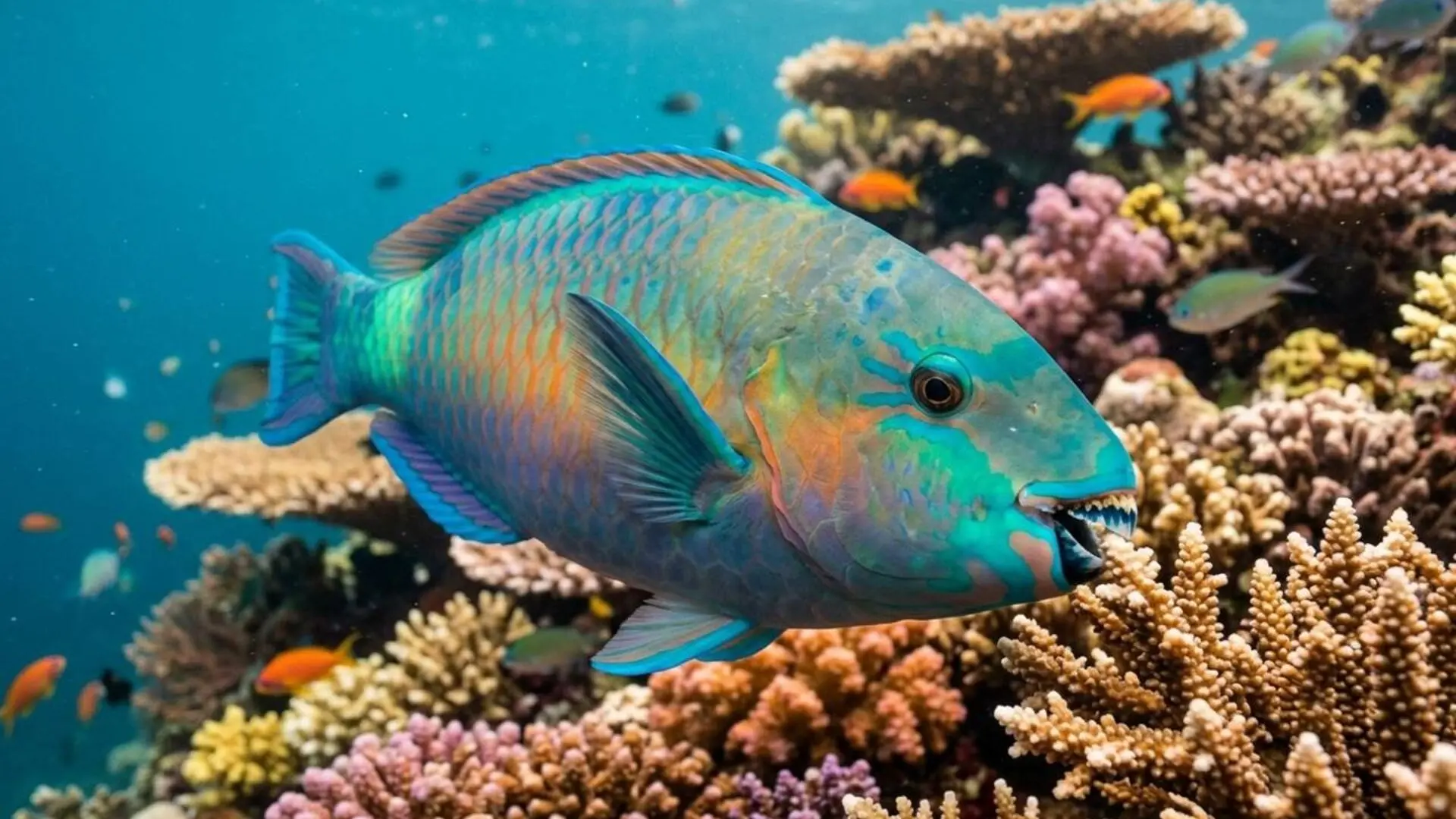
Parrotfish (Scaridae)
Protected under Phuket’s 2024 provincial regulation. Penalty: up to 100,000 baht and/or one year in prison. Spearfishing, rod-and-line, and any form of taking are forbidden. In marine national parks, the National Park Act applies and is stricter.
How to recognize them: bright coloration (blue, green, turquoise, sometimes pink), a heavy fused «beak,» 25–50 cm long. They feed directly on coral with an audible crunching sound.
Sea turtles — four Andaman species
Green (Chelonia mydas), leatherback (Dermochelys coriacea), hawksbill (Eretmochelys imbricata), and olive ridley (Lepidochelys olivacea). Hawksbill and leatherback are critically endangered; green is endangered. Banned actions include touching, stroking the shell, holding the flippers, chasing, swimming directly at a turtle, or using flash during underwater photography. Penalty: up to 200,000 baht and two years in prison; inside a national park — up to 500,000 baht and five years.
Corals — every species, no exceptions
Since April 22, 2025, any contact with coral — including a fin tip — is prohibited under the Marine and Coastal Resources Management Act. The ban covers:
- Touching with hands, fins, mask, or gear
- Breaking off pieces «as a souvenir»
- Picking up coral fragments found on the beach
- Wearing sunscreen with oxybenzone or octinoxate in the water — a separate fine up to 100,000 baht
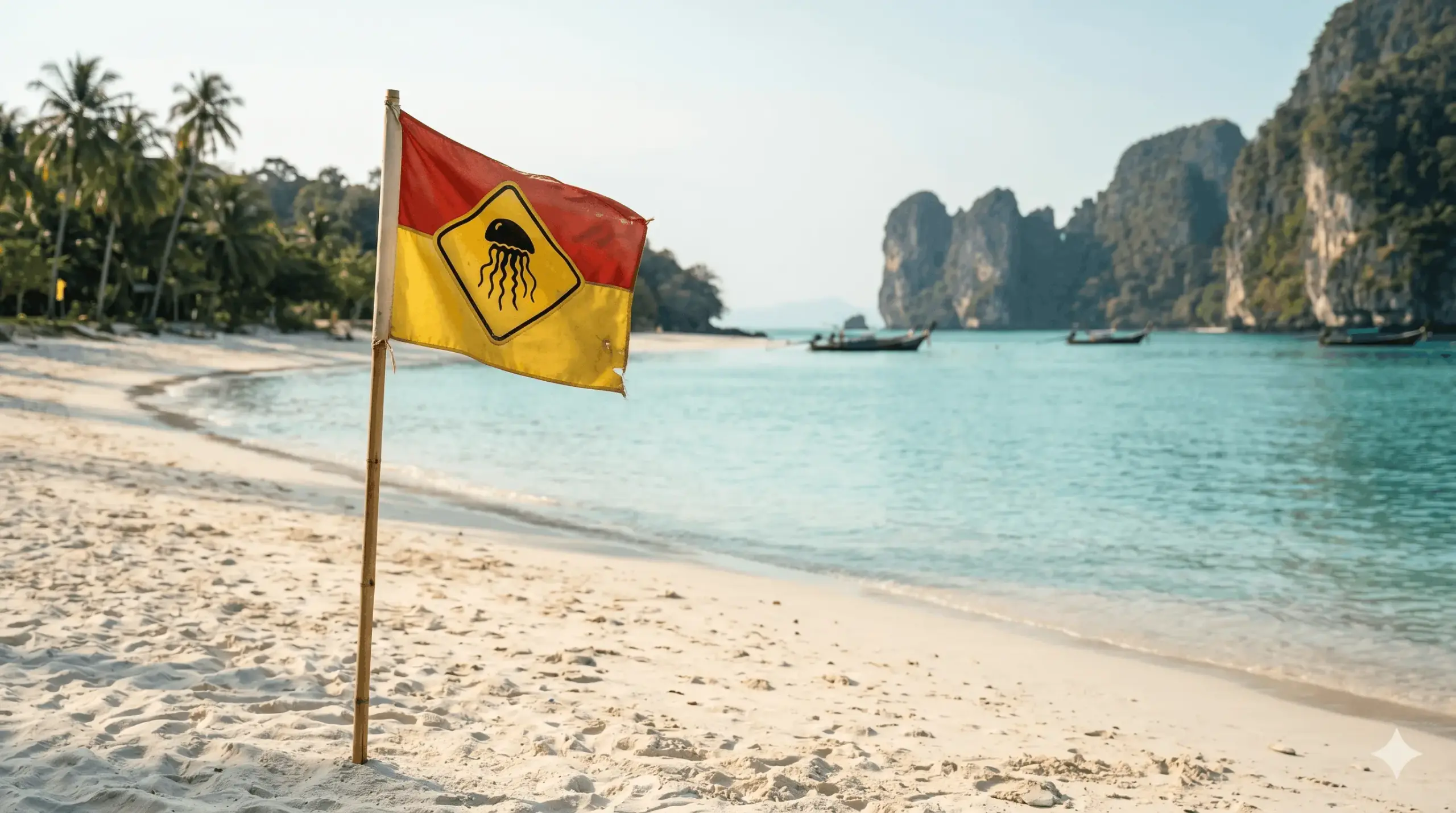
Where enforcement is heaviest: Similan, Surin, Phi Phi Leh (Maya Bay), Racha Yai, and Coral Island (Koh Hae). In these zones, the regulation requires at least 2 meters of water between the surface and the reef before you may swim above it.
Giant clams and other mollusks
Giant clams (Tridacna gigas and relatives) are listed under CITES Appendix II. In Thailand, harvesting, sale, and export through customs are all prohibited: up to 40,000 baht in fines plus confiscation at the airport.
Penalty table for 2026
The table below shows the three layers of fines in force in Thailand in 2026: the local provincial regulation (Phuket-specific), the Marine and Coastal Resources Management Act (national waters), and the National Park Act (Similan, Surin, Phi Phi). The same action costs five times more inside a national park.
| Violation | Where | Fine (baht) | Prison term |
|---|---|---|---|
| Catch/possess parrotfish | Phuket (outside NP) | up to 100,000 | up to 1 year |
| Touch/break coral | All Thai waters | up to 100,000 | fine or removal from zone |
| Touch/chase sea turtle | All Thai waters | up to 200,000 | up to 2 years |
| Harvest in a national park | Similan, Surin, Phi Phi | up to 500,000 | up to 5 years |
| Oxybenzone sunscreen | Marine national parks | up to 100,000 | — |
| Exporting giant clam shells | Customs | up to 40,000 + confiscation | — |
In May 2026, additional patrols cover Kata, Karon, and Kamala beaches and the approaches to Similan, Surin, Coral Island, and Phi Phi Leh. Tourist video footage of violations has become a common trigger for investigations — several TikTok posts have ended with police visiting the offender’s hotel.
Seven snorkeling rules for 2026
The short version: look, but don’t touch; don’t take anything out of the water; don’t feed the fish. The rules took effect on April 22, 2025, and the boat captain plus DMCR officers enforce them across the entire Andaman Sea.
- Minimum 2 meters of water above the reef. If it’s shallower, swimming over that section is prohibited.
- Life vests are mandatory. Only certified freedivers can take them off, with a valid card.
- No touching. Corals, fish, starfish, turtles, anemones — observe, don’t reach.
- Take nothing out of the water. Shells, starfish, coral fragments, sea cucumbers — everything stays in the sea.
- No feeding the fish. Bread, chips, boiled eggs alter fish behavior and damage the reef ecosystem.
- Reef-safe sunscreen only. No oxybenzone, no octinoxate.
- Don’t stir up sediment with your fins. Silt smothers coral polyps within minutes.
On Tisland Travel boats running Similan, Phi Phi, Racha, and Coral Island trips, the guide runs through these rules in your language before every water entry.
What to do if you witness a violation
- Don’t intervene personally — confrontations in the water tend to escalate.
- Record video or photos with location data in EXIF.
- Report to your boat captain — they will pass it to DMCR or the Tourist Police.
- Direct numbers: Tourist Police — 1155 (24/7, English), DMCR Phuket — +66 76 391 145, emergency — 191.
In April and May 2026, several cases were opened based purely on bystander video.
FAQ: Phuket protected marine species
Can I lift a starfish out of the water for a photo?
No. Starfish are not formally on Thailand’s protected list, but as of April 22, 2025, lifting any marine animal out of the water is prohibited. A starfish removed from water typically dies within 24 hours. Fine: up to 100,000 baht.
What is the fine for accidentally touching coral with a fin?
Up to 100,000 baht under the 2025 Marine Resources Act. In actively patrolled zones (Similan, Surin), a single accidental brush usually ends with a verbal warning from the park guide. Deliberate touching, breaking, or pocketing coral leads to a formal fine and report.
Is parrotfish protected everywhere in Thailand?
In Phuket, yes — under a 2024 provincial regulation (up to 100,000 baht and one year in prison). Across the rest of the country, protection works through the 2025 Marine Resources Act and the National Park Act (up to 500,000 baht and five years inside a marine national park).
Which sunscreen is allowed in Thai marine national parks?
Sunscreens without oxybenzone (BP-3) or octinoxate (OMC) — the ingredient list is on the bottle. Reef-safe versions based on zinc oxide and titanium dioxide are permitted. Violation fine: up to 100,000 baht.
How do I report a violation if I don’t speak Thai?
Tourist Police — phone 1155 (English, 24/7) or the Thailand Tourist Police App. Video and location data are the strongest evidence. You can also tell your boat captain, who will pass it through official channels to DMCR.
Bottom line
The rules around Phuket’s waters changed structurally on April 22, 2025: «look, don’t touch» is no longer politeness — it is law with a real penalty. On May 9, 2026, that became headline news, and patrols will only intensify through the 2026/2027 high season.
The practical path is one: go out with a licensed operator, listen to the guide’s briefing, and leave everything that swims or grows in the sea exactly where it is.
Planning snorkeling or diving in Phuket in May 2026? Similan Islands close on May 15 — final departure dates are available on the Tisland Travel website. For Phi Phi, Racha, James Bond Bay, and Coral Island, book through Tisland Travel — a protected-species briefing in your language is part of every trip.
Sources
- Khaosod English — Phuket tightens patrols after foreign tourists spear parrotfish. May 11, 2026.
- The Thaiger — Chinese tourists condemned for hunting protected fish in Phuket. May 10, 2026.
- TAT Newsroom — Stricter Regulations for Diving Activities Now in Effect in Thailand. May 2025.
- Department of Marine and Coastal Resources (DMCR), Thailand — official site.
- 5 Star Marine Phuket — New Snorkeling Rules in Thailand. April 26, 2025.
All sources verified May 19, 2026.